Penn State researchers model Liberty Bell's sound
Scientists at Penn State University have modeled the acoustic properties of the Liberty Bell using data from a replica. The aim is to determine how the bell sounded before it cracked.
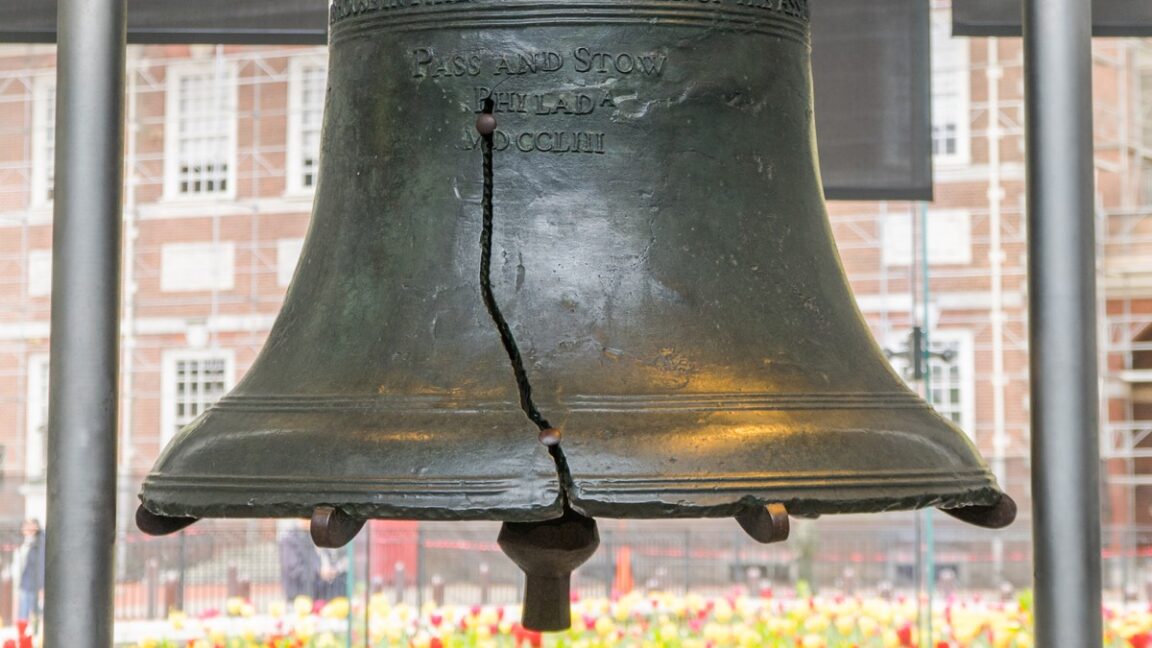
Researchers at Penn State University have sought to determine how the legendary Liberty Bell might have sounded before it cracked and became permanently silent. The project, timed with the U.S. Semiquincentennial, utilizes data collected from one of the bell's replicas.
The study modeled the bell's acoustic properties, with initial findings presented at a meeting of the Acoustical Society of America in Philadelphia. Historical records do not pinpoint the exact moment the Liberty Bell acquired its famous crack, but it is believed to have occurred sometime between 1817 and 1846. An 1846 newspaper account describes the bell cracking irreparably on February 23 of that year.
The bell's damage was not unprecedented; its rim cracked shortly after arriving in Philadelphia in 1752, upon the very first test strike. The bell was recast twice by local foundry workers John Pass and John Stow. The first recast produced a sound likened by one bystander to banging coal scuttles.
Scientists now aim to scientifically reconstruct the bell's original sound, unheard for approximately 180 years. The modeling offers new insights into the bell's history and the behavior of sound waves in metal.