Permafrost Data Aids Arctic Wastewater Lagoon Repair
EXP utilized continuous temperature monitoring to assess permafrost conditions around the Kugluktuk sewage lagoon, identifying issues like ground thaw and subsidence to inform repair strategies.
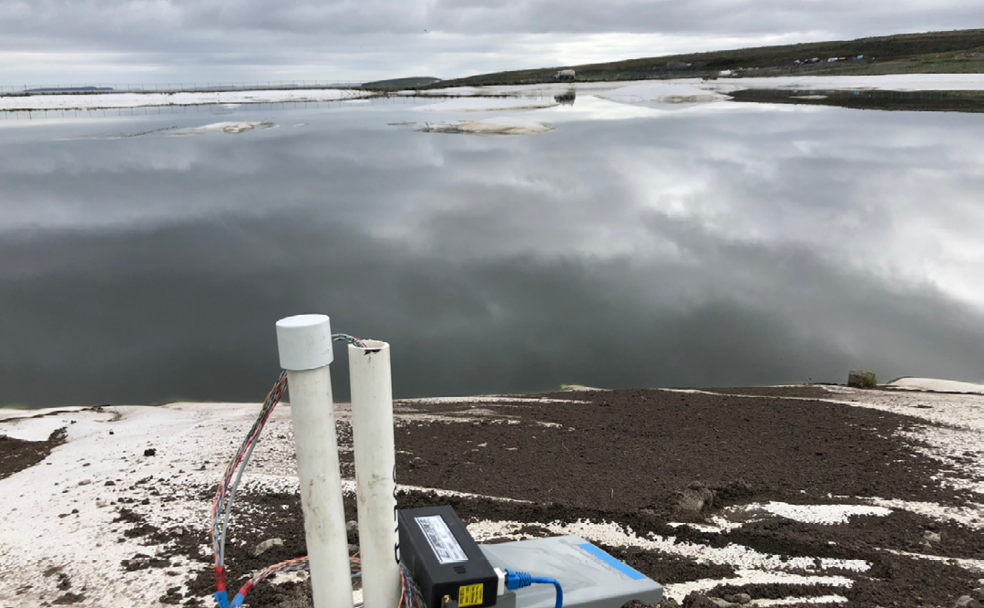
Engineering firm EXP has employed continuous permafrost temperature monitoring to diagnose and plan repairs for a persistently malfunctioning sewage lagoon in Kugluktuk, Nunavut.
The study, conducted for the Government of Nunavut, focused on the Kugluktuk wastewater lagoon, which has experienced significant problems since its commissioning in 2009, including a floating liner, leakage, and substantial berm subsidence exceeding 40 centimeters in places. These issues are attributed to the lagoon's construction on permafrost and the impact of surrounding water and sewage-induced warming on the frozen ground.
EXP installed thermistor strings and data loggers into boreholes around the lagoon's berms in 2021. This system continuously recorded ground temperatures, providing crucial data on permafrost stability. Follow-up data downloaded in March 2022 confirmed that the ground froze back to depths of at least four meters in some areas, but indicated potential unfrozen ground in one berm, suggesting a complex thermal environment.
The temperature data has been instrumental in understanding the geotechnical challenges affecting the lagoon's performance. EXP is now developing remedial options, including relining combined with subsurface drainage systems and methods to block surface and subsurface water flow. Ongoing data collection is intended to refine these proposed solutions before detailed design and construction begin.