Petroleum Coke: Partial Graphitization During Calcination Process
Petroleum coke undergoes some structural ordering during calcination, but true graphitization requires much higher temperatures. The process enhances key properties.
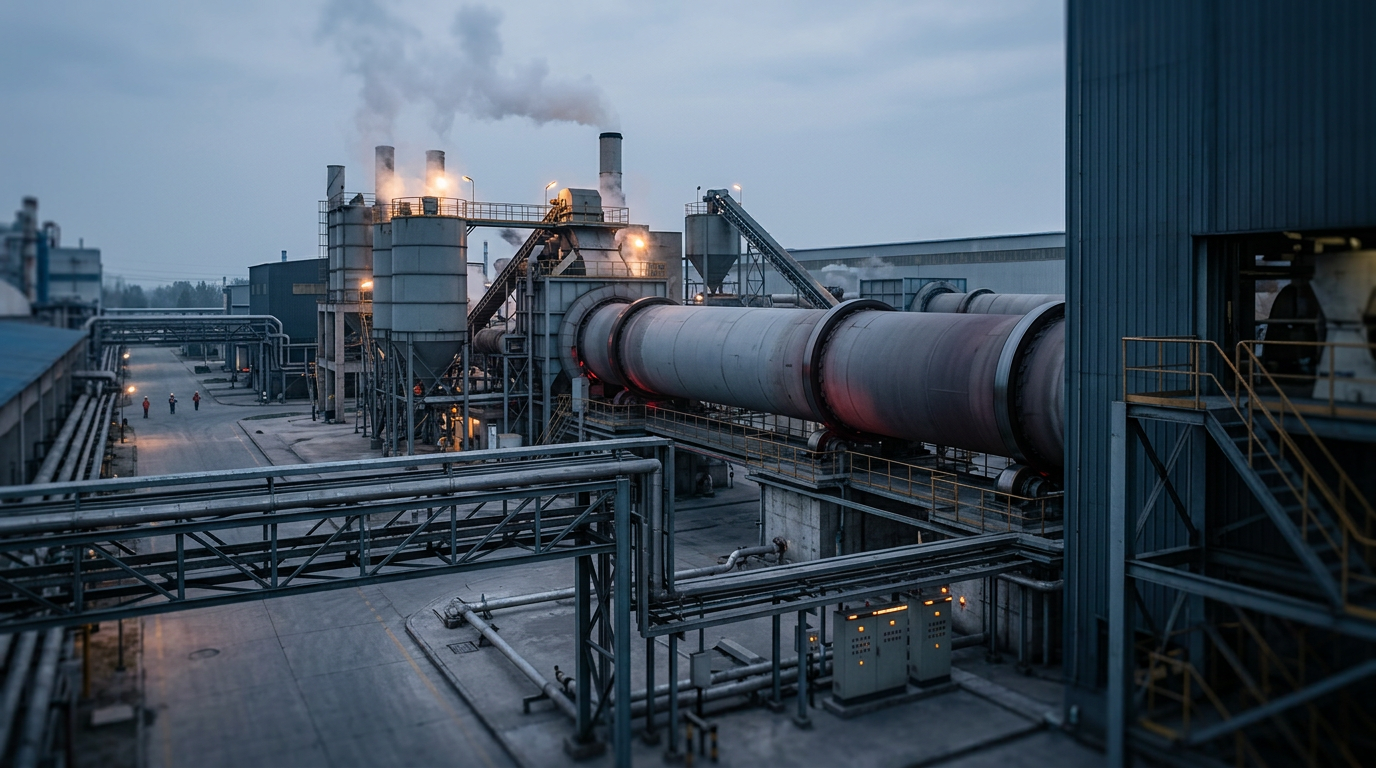
Heating petroleum coke to between 1200–1350 °C during calcination leads to significant structural ordering, but not complete graphitization. The material moves towards a precursor stage of graphite formation, improving its characteristics for industrial applications.
At a microscopic level, the carbon atomic layer sheets within the petroleum coke shift from disordered to more ordered arrangements at high temperatures. X-ray diffraction analysis shows a reduction in interlayer spacing and an increase in crystallite dimensions, indicating a move toward a graphite-like structure.
True graphitization, where carbon layers fully rearrange into a three-dimensional ordered graphite crystal structure, demands temperatures exceeding 2500 °C. At calcination temperatures, only about 60–70% of this ordering process is achieved, with a substantial amount of turbostratic structure remaining. Consequently, the product is termed "calcined coke," not graphite.
However, this incomplete graphitization is precisely what imbues calcined coke with its higher bulk density, lower porosity, improved electrical conductivity, and enhanced resistance to thermal shock. These refined properties are the core value derived from the calcination process. Achieving actual graphitization necessitates a separate, much higher temperature treatment step.