Physicists Find Strong Evidence for Glueballs, Elusive Particles
Physicists at the Beijing Spectrometer III (BES III) experiment have uncovered compelling new evidence for the existence of so-called glueballs, elusive composite particles predicted by quantum theory that are made entirely of gluons.
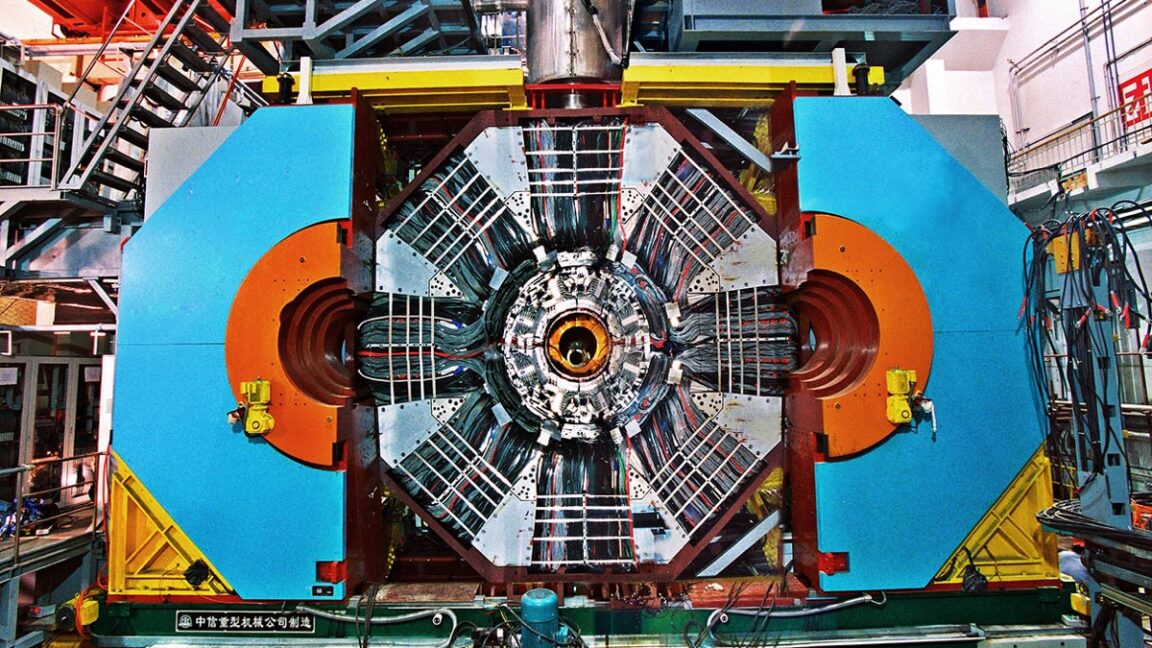
Physicists working with the Beijing Spectrometer III (BES III) experiment have found convincing new evidence suggesting the existence of glueballs, a theoretical composite particle composed solely of gluons.
These particles are a prediction of quantum chromodynamics, the theory describing the strong nuclear force that binds quarks together to form protons and neutrons. Despite being a theoretical requirement, direct experimental evidence for glueballs has remained elusive until now.
The findings were recently posted as a preprint on arXiv and presented at the International Conference on High Energy Physics (ICHEP). The BES III collaboration reported observing signals consistent with the predicted properties of glueballs in their experimental data.
If confirmed, these observations could represent a significant step in understanding the fundamental nature of the strong nuclear force and validating key aspects of the Standard Model of particle physics. The existence of multiple types of glueballs is also predicted by the theory.