Proalpha integrates energy management into ERP system
Proalpha Group has developed and integrated a Green ERP solution designed to help industrial companies manage and reduce their energy consumption and emissions.
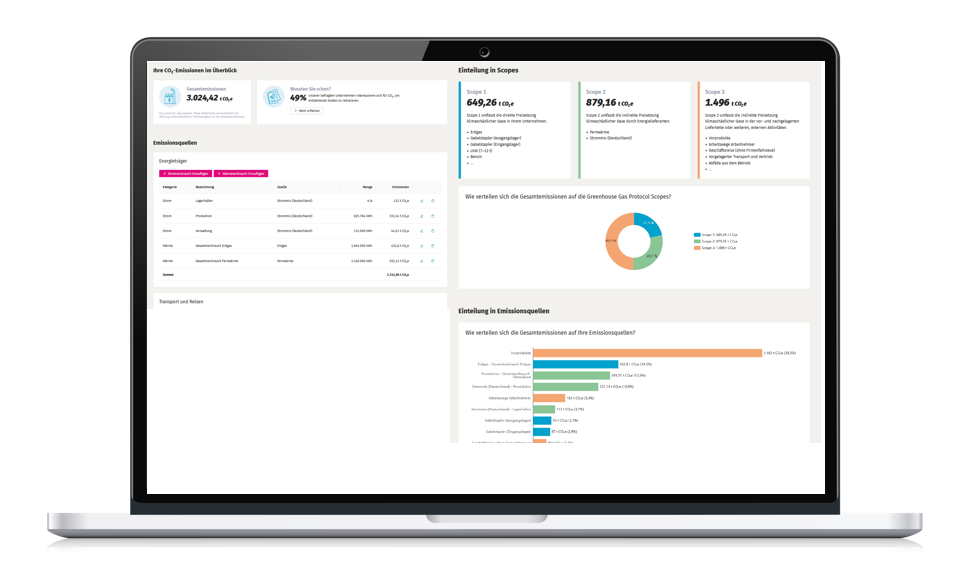
Proalpha Group has launched a new Green ERP solution aimed at supporting industrial companies in their sustainability efforts. The solution is designed to assist businesses in analyzing and reducing their emissions, resource consumption, and associated costs.
The offering stems from Proalpha's acquisition of ENIT in 2022, a company specializing in energy monitoring and emissions calculation. By integrating ENIT's technology into its ERP+ software, Proalpha provides a comprehensive tool for companies to meet their sustainability targets. The tracking and reduction of emissions, such as the carbon footprint, are becoming increasingly critical demands within the industry due to pressure from various stakeholders, including regulators and society.
Proalpha describes its solution as easily deployable and integrable, utilizing a "plug-and-play" approach. This allows companies quick access to real-time data from machinery and facilities immediately after implementation. The system, developed by ENIT, is designed for compatibility with various hardware and aims to simplify complex emissions calculations.
The system includes both an energy monitoring tool and a separate CO2 calculation software. While the CO2 calculation software can be used without separate energy monitoring through manual input, integrating energy monitoring significantly facilitates data collection and accuracy. Proalpha utilizes the internationally recognized Greenhouse Gas Protocol (GHG) standard for calculating different emission categories like Scope 1, 2, and 3, with a particular focus on Scope 3 emissions relevant to industry, which relate to the entire supply chain.
Companies that combine their ERP systems with, for example, Manufacturing Execution Systems (MES) and machine data capture can access a significant portion of the required data. According to Proalpha, such integration can cover up to 70 percent of the data that companies need.