Qingdao Co-Nele Mixer Operational at Gujarat Refractory Plant
QINGDAO CO-NELE MACHINERY CO., LTD. has installed a 330L planetary mixer at a refractory material manufacturing plant in Gujarat, India. The equipment will be used for mixing dry refractory mortar.
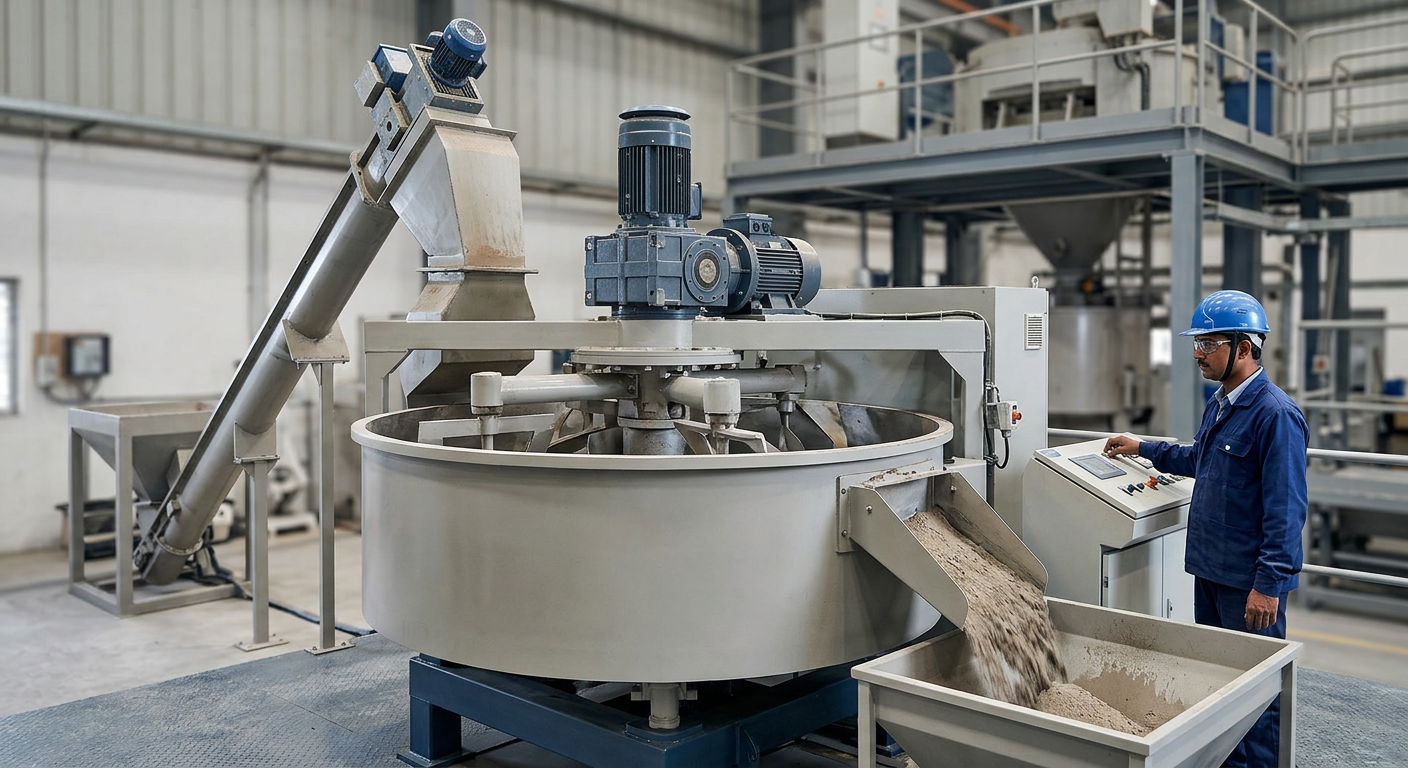
QINGDAO CO-NELE MACHINERY CO., LTD. has announced the installation and commissioning of a CO-NELE 330L planetary mixer at a specialized refractory material manufacturing plant in Gujarat, India. The unit is designed to handle 500kg of dry refractory mortar per batch, with each mixing cycle completed in five minutes.
The installation is intended to support local fire brick production lines. It utilizes Co-Nele's planetary mixing technology, which aims to provide uniform mixing without dead zones in the mixing tank. Gujarat, a state in western India, is a significant industrial base, with growth in high-temperature industries like steel and glass increasing demand for high-standard refractory products.
Traditional mixing equipment in the region has reportedly suffered from drawbacks such as uneven powder mixing and raw material agglomeration, leading to defective fire brick products. This local enterprise's decision to upgrade its core raw material processing procedure with the Co-NELE planetary mixer is intended to improve product quality and enhance production efficiency. The manufacturer states the mixer has been adapted to local conditions, including climate and common raw materials.
The CO-NELE 330L mixer is said to improve the qualification rate of refractory bricks by reducing issues like cracking, inconsistent density, and unstable heat resistance. The five-minute batch mixing cycle is designed to facilitate efficient continuous production. The company also highlights the equipment's wear-resistant structure and optimized sealing design, which aim to reduce failure rates and maintenance costs in local operating environments.
In the manufacturing of refractory bricks, raw material mixing is a critical pre-process that directly determines the finished product's high-temperature resistance and structural stability. Previous mixing methods have reportedly led to significant batch quality variations, limiting companies' capacity for higher-value orders. The new mixer aims to standardize quality and is suited for mass production requirements.