Quantum Simulation Explored for High-Temperature Superconductors
Physicists at Ludwig-Maximilians-Universität München are using quantum simulation in the lab to understand complex particle systems. The research aims to shed light on high-temperature superconductors.
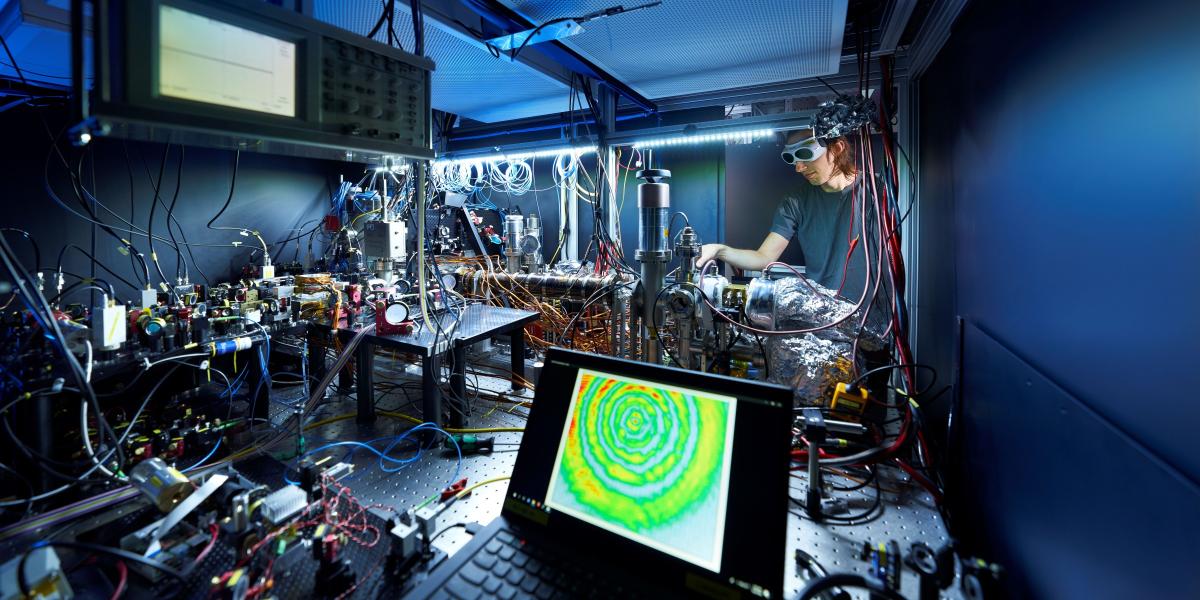
Ludwig-Maximilians-Universität München (LMU) researchers are employing quantum simulation, a form of laboratory-based investigation, to advance the understanding of complex quantum phenomena. The research specifically focuses on elucidating the operational mechanisms of high-temperature superconductors, with the long-term goal of potentially enabling superconductivity at room temperature.
In the 45th episode of the "Exzellent Erklärt" podcast, LMU physicists Monika Aidelsburger and Fabian Grusdt discuss their work in tackling multifaceted challenges in physics. While the behavior of individual atoms and molecules can be predicted using quantum physics, comprehending the collective effects of numerous particles interacting remains a significant challenge. Laboratory-based quantum simulations offer a method to empirically study these phenomena.
The research highlights the importance of interdisciplinary collaboration within the MCQST research cluster. Theorists and experimental physicists work in tandem to test theoretical models and develop novel research methodologies. "Working with experimental physicists is incredibly enriching for us because we complement each other," stated Professor Fabian Grusdt. "As theorists, one of the best things that can happen is when something you have suggested is realized in the experiment and shown that it actually works."
Quantum simulations hold the promise of providing answers to key questions in materials science and physics. According to the researchers, obtaining the initial successful signal from an experiment is a critical juncture, after which focus shifts to optimizing and calibrating the results. LMU's research endeavors aim to unlock new technological applications based on a deeper comprehension of superconductivity.
Monika Aidelsburger leads research on quantum simulations with ultracold quantum gases trapped in optical lattices and heads the "Engineered Quantum Systems" group at the Max Planck Institute of Quantum Optics. Fabian Grusdt is Professor of Quantum Many-Body Physics at LMU.