Refrigeration Compressor Market Projected to Grow at 3.9% CAGR Through 2036
The global refrigeration compressor market is forecast to expand from an estimated USD 20.6 billion in 2026 to USD 30.1 billion by 2036, reflecting a compound annual growth rate of 3.9%.
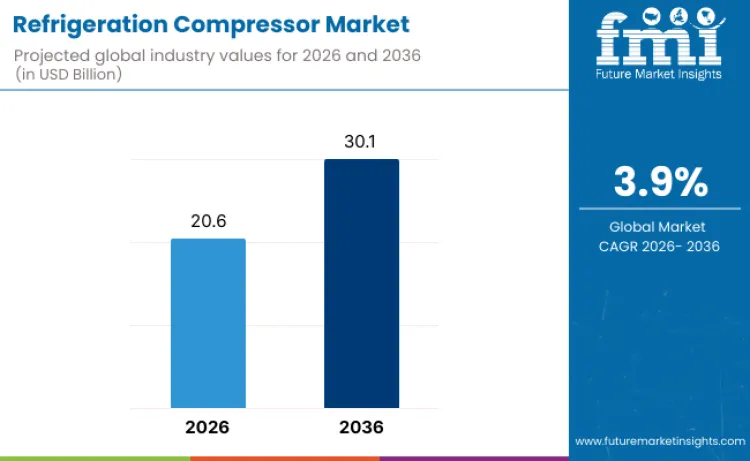
The global market for refrigeration compressors is projected to reach USD 30.1 billion by 2036, growing from an estimated USD 20.6 billion in 2026. This represents a compound annual growth rate (CAGR) of 3.9% over the forecast period, according to an analysis by Future Market Insights.
The steady growth is attributed to the consistent demand for reliable cooling solutions across residential, commercial, and industrial sectors. Factors such as increasing urbanization, changing dietary habits leading to higher consumption of frozen and packaged foods, and the expansion of cold chain infrastructure in regions like Asia Pacific are key drivers. Emerging economies, particularly in Asia, are expected to contribute significantly to this expansion.
A substantial portion of demand stems from the replacement of older refrigeration units with more energy-efficient models. This trend is propelled by rising electricity costs and increasingly stringent energy efficiency standards. Manufacturers are responding by developing advanced compressors, including inverter-based and variable-speed technologies, which offer improved performance and reduced energy consumption. Commercial refrigeration, including retail and logistics, along with industrial applications, continue to provide a stable demand base.
The industry is navigating challenges related to regulatory changes and cost fluctuations. Restrictions on high Global Warming Potential (GWP) refrigerants are necessitating design modifications and shifts in material selection. Additionally, volatile raw material prices and higher compliance costs are impacting profit margins. Companies are investing in product innovation, material science, and sustainable manufacturing practices to maintain competitiveness and meet evolving environmental standards.