Report: Organizations Adapt to AI Slower Than Employees
A three-year study finds that the challenge for companies is not AI adoption, but organizational adaptation to employees who have already embraced the technology.
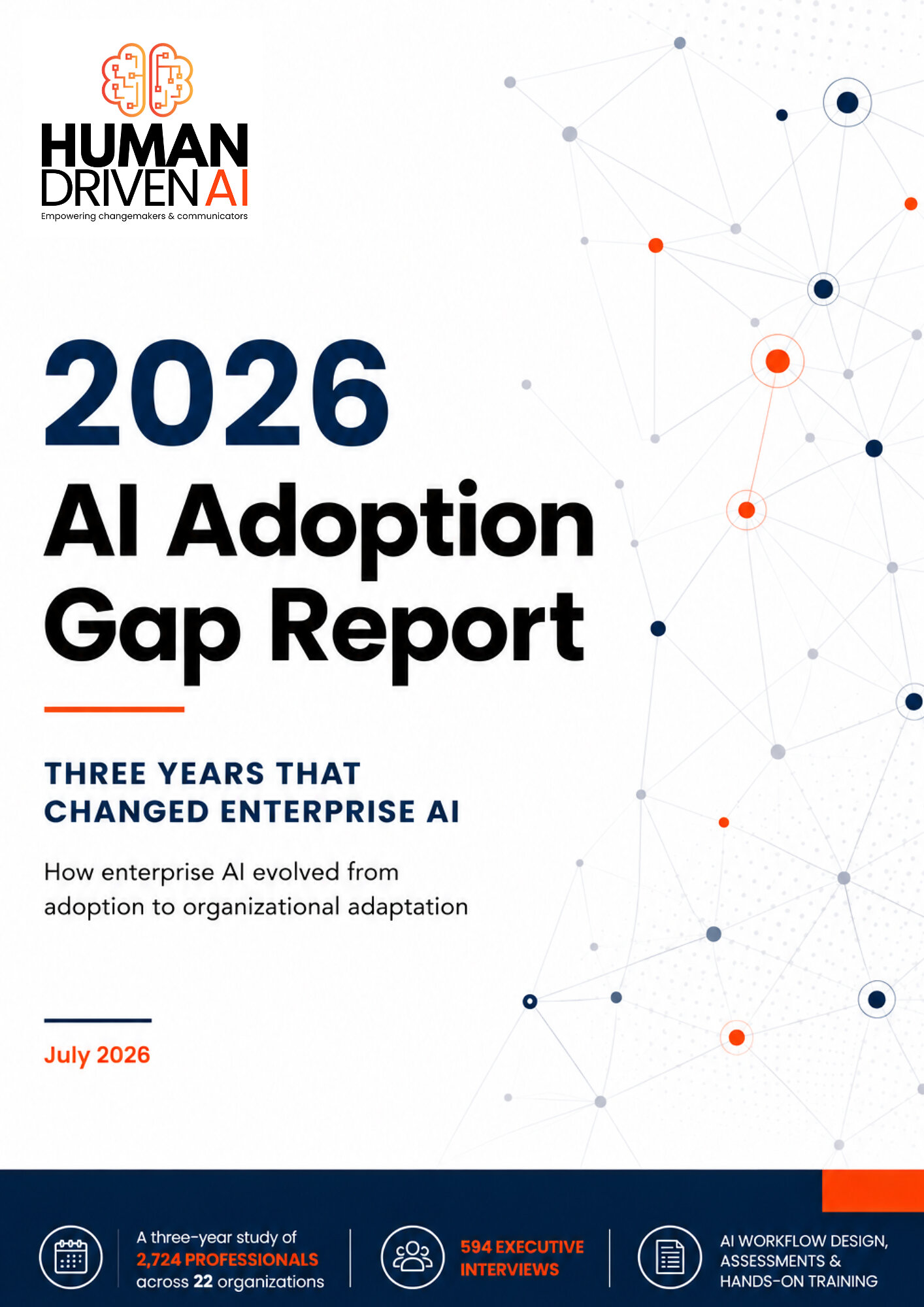
A new three-year report, the "AI Adoption Gap Report 2026," reveals that the primary challenge for enterprises in artificial intelligence (AI) is no longer technology adoption, but rather the organization's capacity to adapt to employees who have already widely integrated AI into their daily work.
The report, published by Human Driven AI, is based on research that tracked AI's evolution within businesses from 2023 to 2026. The study involved interviews with 594 executives and analyzed the AI usage of 2,724 professionals across 22 organizations. The findings indicate that employees have adopted AI at a significantly faster pace than organizations have been able to revise their operational methods.
According to the report, the focus has shifted from the technical implementation of AI to how companies should redesign their processes and job roles. The report notes that 85% of professionals surveyed actively used AI in their work in 2026. The questions posed by company leaders have evolved from concerns about initiating AI use to current inquiries about how work itself should change.
"The organizations that are succeeding aren't eliminating people. They're redefining roles," said Jennifer Jones-Mitchell, Founder and CEO of Human Driven AI. "The answer was never to resist AI. It's about helping employees learn to work alongside it. The companies that pull ahead won't just have better AI; they will build better organizations around how humans and AI work together."
The report emphasizes that future competitive advantage will not stem solely from AI adoption, but from an organization's ability to reconfigure its operational models to accommodate an AI-proficient workforce and work environment.