Research: Large-scale composite manufacturing to be enhanced by injection molding
Researchers have developed a new method enabling the serial production of continuous fiber composites using injection molding. This opens doors for large-scale manufacturing, particularly in the automotive sector.
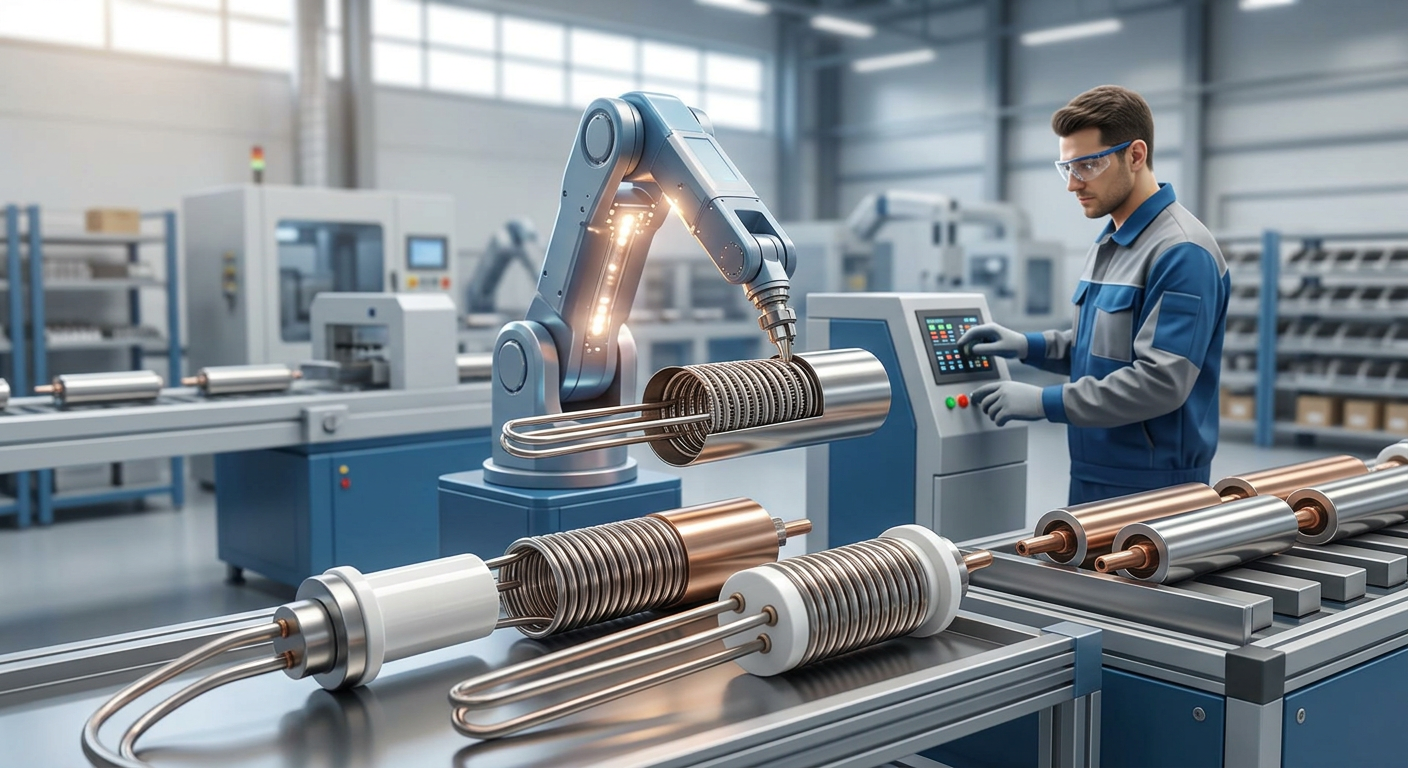
Scientists at the Fraunhofer Institute, in collaboration with ENGEL AUSTRIA GmbH, have developed a novel technology that facilitates the efficient serial production of continuous fiber-reinforced composites with thermoplastic matrix resins via injection molding. Previously, manufacturing these materials at scale was labor-intensive and economically unviable.
The new approach utilizes an adapted injection molding process. Reactive components are prepared and mixed before being injected into a mold. Crucially, in-situ polymerization occurs directly within the mold, even with textile reinforcements in place. This allows for the production of components with high fiber content and outstanding mechanical properties.
A key advantage of the method is the use of low-viscosity monomers that polymerize directly inside the machine. This low viscosity ensures ideal wetting of the fiber structures without displacing them, a significant improvement over previous processes that could only handle short fibers.
The developed prototype machine, the ENGEL e-victory 120, integrates multiple processing steps into a single unit, enhancing flexibility and speed. The technology was recognized with an AVK Innovation Prize in the "Processes" category.
This advancement is expected to significantly increase the adoption of continuous fiber composites in the automotive industry, where their low weight and high strength are highly valued. As an example, a glass fiber-reinforced polyamide brake pedal insert was produced for automotive supplier ZF Friedrichshafen.