Research to Trace Early Human Migration Routes in Asia
A new two-year project utilizes computer simulations to investigate how early humans dispersed across Southeast Asia between 1.2 and 0.8 million years ago.
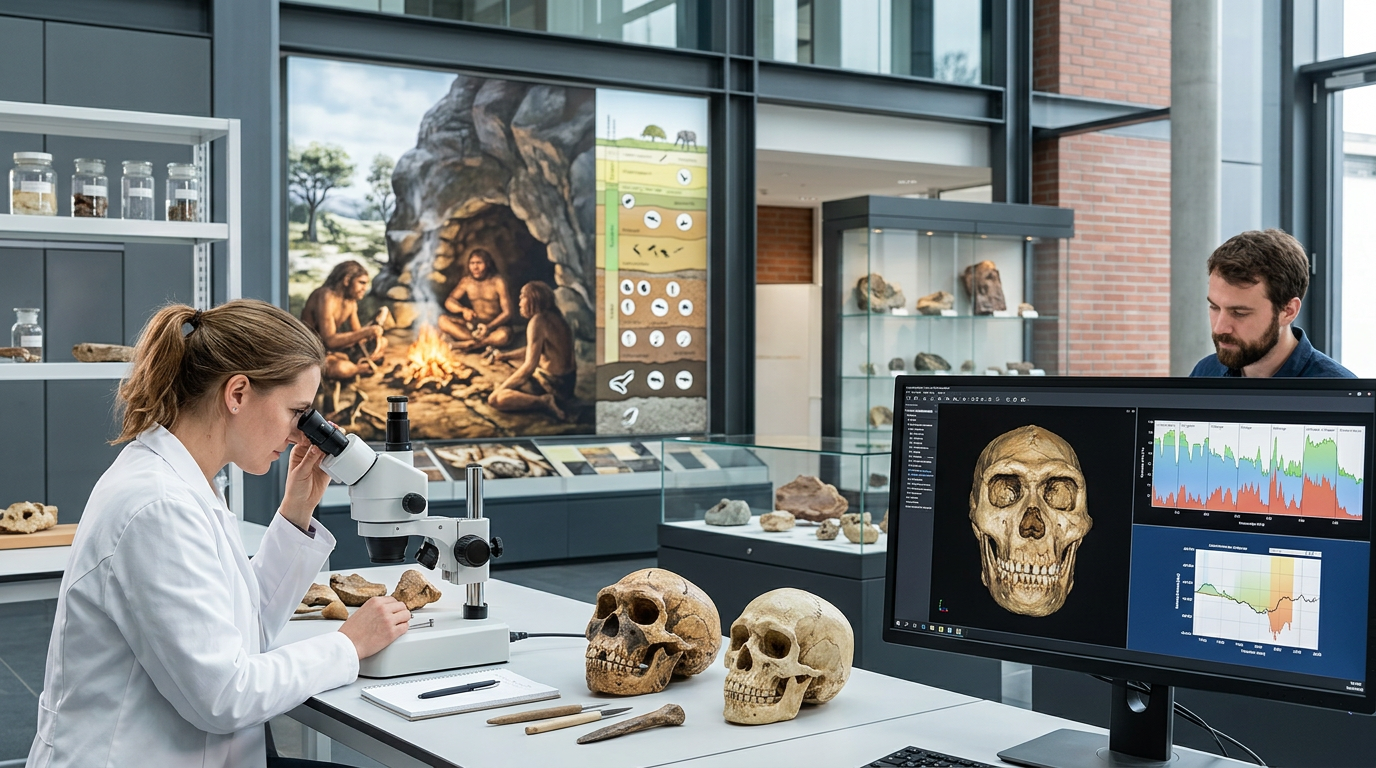
The Senckenberg Centre for Human Evolution and Palaeoenvironment is launching a two-year research project to investigate the migration routes of early humans in Asia. The initiative will employ agent-based modeling and computer simulations to study how prehistoric humans spread across Southeast Asia approximately 1.2 to 0.8 million years ago and how they responded to environmental conditions.
The study is led by Indonesian geologist Mika Puspaningrum in collaboration with German colleagues. Funding for the project has been provided by the Daimler and Benz Foundation, the Johanna Quandt University Foundation, and the Werner Reimers Foundation. The aim is to analyze and interpret data on Pleistocene environmental conditions, flora and fauna, temperature fluctuations, sea levels, food availability, and volcanism using specialized software.
Professor Friedemann Schrenk, head of the Paleoanthropology Department at the Senckenberg Research Institute, highlighted that modern simulation software opens new perspectives in early human research. "Our goal is to analyze, combine, and interpret these databases with software support," Schrenk stated. "Visualization also plays a crucial role, as it makes research findings more tangible for both scientists and the interested public."
The computer simulations are being developed with the support of computer scientists from the University of Trier, who have previously created comparable simulations for industrial companies. The methodology developed in this project is intended for application to other regions and time periods in the future. Schrenk expressed a long-term interest in enabling researchers worldwide to access such programs and online databases freely, fostering equitable and up-to-date research globally.