Researchers develop wearable sensor using traditional mulberry paper
A team at Jeonbuk National University has integrated 3D-printed microneedles and wireless sensors into a breathable mulberry paper patch for health monitoring.
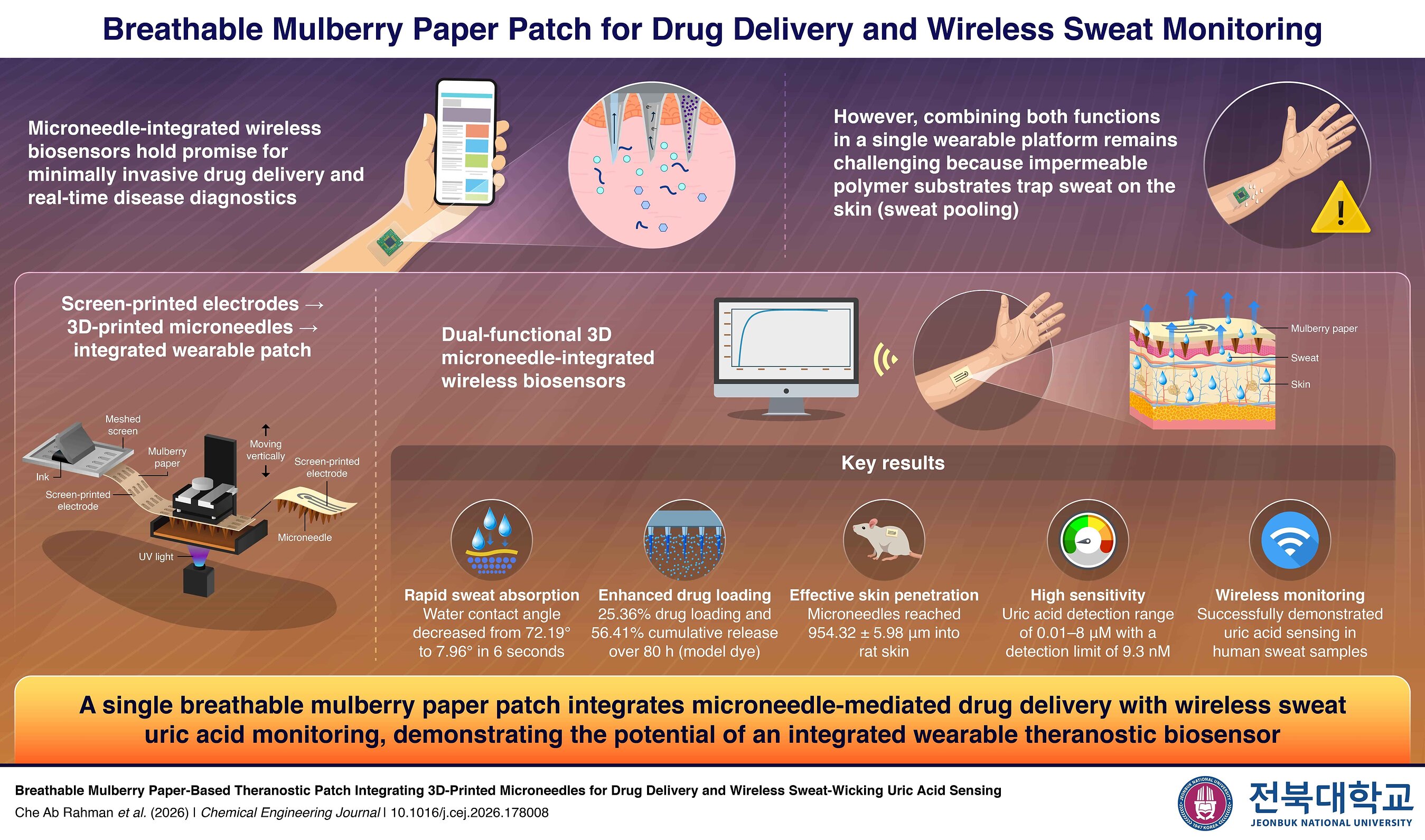
Researchers at Jeonbuk National University, South Korea, have developed a wearable health-monitoring patch that utilizes traditional Korean mulberry paper, known as hanji. The device combines 3D-printed microneedles for drug delivery with printed electrochemical sensors to track uric acid levels through sweat.
Led by Professor Sooman Lim, the research addresses a common limitation in wearable technology: skin discomfort caused by sweat accumulation under non-breathable patches. The porous network of mulberry paper allows for moisture transport, which the researchers report significantly improves performance compared to synthetic alternatives. The study, published in the Chemical Engineering Journal, highlights the material's ability to facilitate skin-safe, consistent sensing.
Technical evaluations showed that the 3D-printed microneedles could penetrate excised tissue effectively for drug delivery, while the electrochemical sensor achieved high accuracy in detecting uric acid, with results aligning with laboratory-grade liquid chromatography-mass spectrometry (LC-MS) analysis. The entire system operates on a low-power wireless configuration.
While the current study focused on testing the sensing and delivery components independently, the findings indicate a potential path for integrated treatment and real-time monitoring devices. Future efforts will concentrate on clinical safety studies and on-body testing to assess the platform’s viability for managing conditions such as gout.