Researchers Explain 'First-Night Effect' Disrupting Sleep in New Places
Sleeping in a new environment can be challenging due to the 'first-night effect.' This phenomenon results from the brain's vigilance in an unfamiliar setting and is common among travelers.
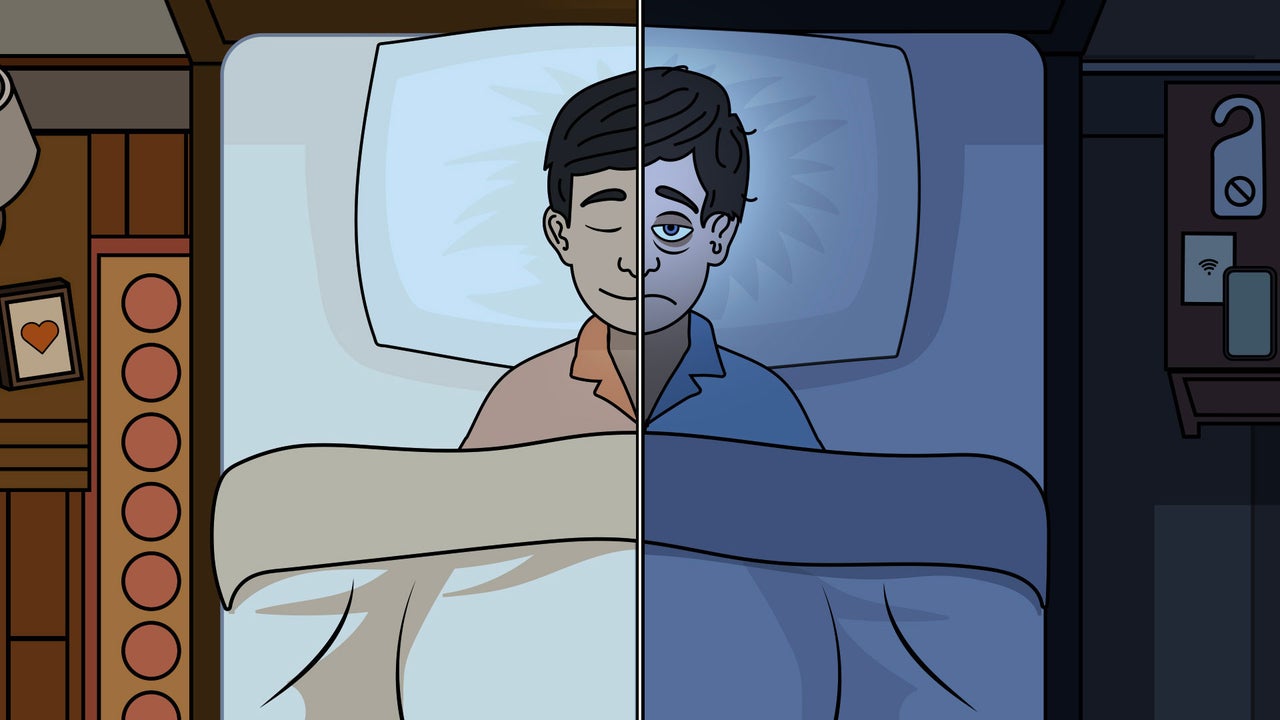
Many travelers experience difficulties falling asleep or staying asleep during their first night in a new location. This phenomenon, known as the 'first-night effect,' is a common, though often unnoticed, issue. Researchers attribute the effect to the brain's evolutionary-rooted vigilance mechanism.
Sleep specialists explain that sleeping in an unfamiliar environment prompts the brain to remain alert. "It is assumed to be an adaptation response that the sleeping brain remains vigilant in this unfamiliar environment," stated Anna Wick, a senior sleep researcher at the University of Freiburg. The brain's frontal lobe, associated with deep sleep, stays more active, leading to reduced sleep depth and duration.
Ahmad Mayeli, a psychiatry professor and sleep researcher at the University of Pittsburgh, notes that most people experience this effect to varying degrees. On average, individuals sleep 20 to 30 minutes less in a new place. Age also plays a role, with the effect being more pronounced in children and older adults, while young adults are least affected.
Psychologists and experts in sleep disorders suggest several methods to improve sleep on the first night. These include practicing good sleep hygiene, such as ensuring a dark and cool bedroom, and bringing familiar items like one's own pillow. Relaxation techniques and the use of positive imagery can also be beneficial, particularly for anxious travelers.
Experts emphasize that the 'first-night effect' typically subsides by the second night. For highly important events, such as meetings or presentations, arriving a day early can be advantageous, allowing the body to acclimate and ensure adequate sleep.