Residential Solar Shading System Market Projected to Reach $10 Billion by 2031
The market for residential solar shading systems is forecast to grow from $6.9 billion in 2021 to $10 billion by 2031, with a compound annual growth rate of 3.6%. Allied Market Research attributes this growth to technological advancements and increasing construction investments.
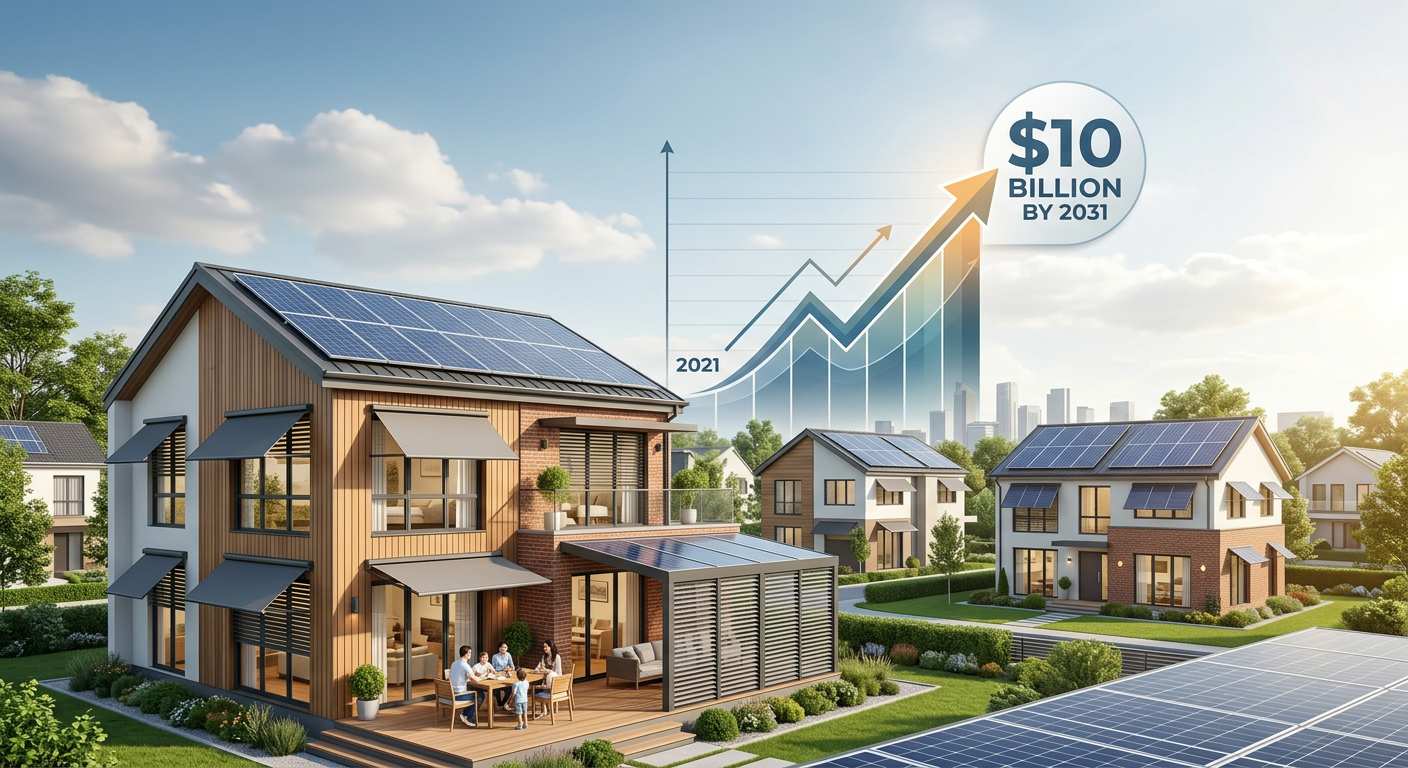
The global residential solar shading system market is projected to reach $10 billion by 2031, expanding at a compound annual growth rate (CAGR) of 3.6% from 2022 to 2031. The market was valued at $6.9 billion in 2021. According to Allied Market Research, key drivers for this expansion include advancements in fabric materials, the need for aesthetic enhancement of residential buildings, and the ability of these systems to increase the usability of outdoor spaces like patios and gardens. The development of motorized and manual retraction mechanisms has also been a significant factor.
Growing consumer focus on reducing energy consumption is leading to increased adoption of solar shading systems to keep homes cool during summer months. These systems also offer protection against harmful UV rays that can damage furniture and flooring. The demand for maximizing the use of available outdoor living spaces further contributes to market growth. However, high installation costs and the initial purchase price of retractable systems may pose challenges to the industry's full potential.
Key players such as Hunter Douglas and Lutron Electronics are expanding their global reach to cater to a growing customer base and enhance their product portfolios. Companies like WAREMA Nederland B.V. have invested in new production and logistics centers to meet rising demand. While harsh weather conditions can impact sector development in certain regions, technological innovations like remote controls and sensors are expected to create new opportunities.
The report anticipates that motorized systems will capture the largest market share, particularly in Europe and North America, driven by increased residential construction and a desire to improve the visual appeal of windows and outdoor areas. The durability and wear resistance of specific solar blinds compared to shades are also noted as advantages.
While the COVID-19 pandemic caused disruptions in supply chains and sales, the market is showing signs of rapid recovery due to vaccinations and eased restrictions. Despite potential short-term impacts from emerging outbreaks, the long-term outlook for the residential solar shading system market remains positive.