RHODÉ Project to Develop Floating HVDC Substations
A consortium of French companies has launched the RHODÉ R&D project to develop floating high-voltage direct current (HVDC) electrical connections for offshore wind farms.
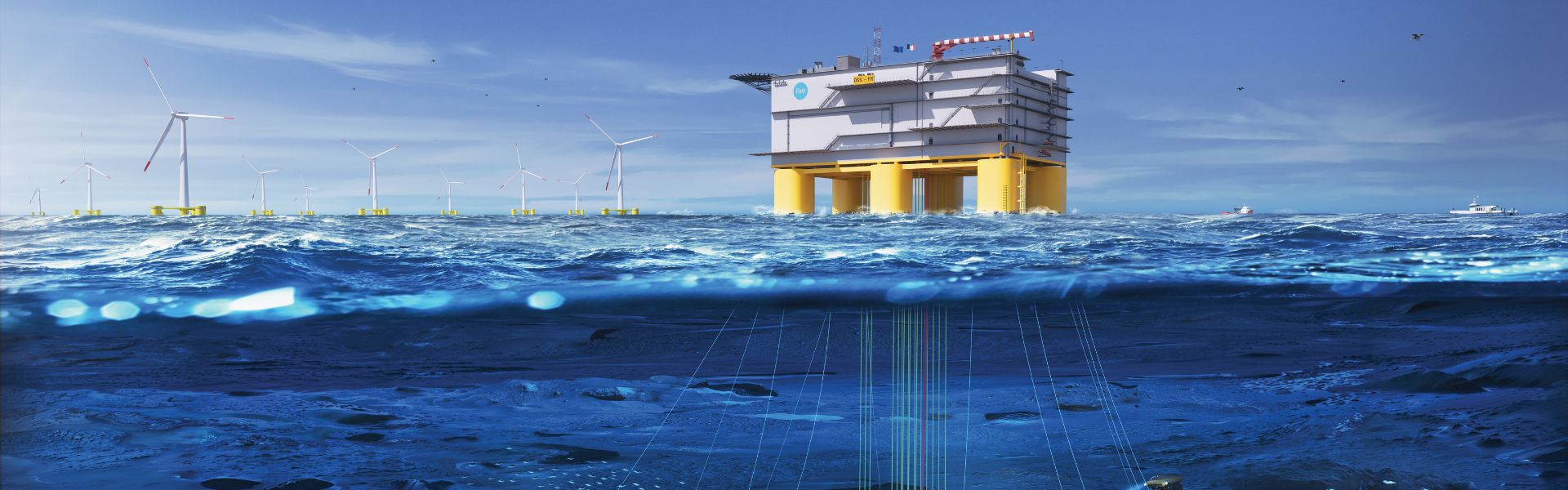
A group of French companies, including Nexans, Chantiers de l’Atlantique, and RTE, has initiated the RHODÉ (Raccordement HVDC Offshore Distant Électrique) project. This research and development initiative aims to design and test the core technological components necessary for the first high-power floating high-voltage direct current (HVDC) offshore grid connections.
The project addresses the growing need for offshore wind power solutions that can operate at greater depths and distances from shore, where traditional fixed substations face limitations. Floating substations are seen as a key development for enabling large-scale offshore wind farms while managing costs and environmental impact.
RHODÉ seeks to bridge the gap between research and industrial implementation, targeting the development of 320 kV or 525 kV floating HVDC connections expected from 2040 onwards. The project also aims to foster a competitive French industrial sector specializing in floating offshore electrical connections.
The collaboration involves extensive R&D, including design, modeling, laboratory testing, environmental impact studies, and sea trials. The consortium comprises Chantiers de l’Atlantique, France Energies Marines, Fondation OPEN‑C, GE Vernova, Nexans, RTE, and SuperGrid Institute, bringing together expertise across the entire value chain.
The RHODÉ project has been awarded a €16 million grant from the French State as part of the France 2030 investment plan.