Sachsen-Anhalt Government Formation: Complex Post-Election Landscape
The results of the state election in Saxony-Anhalt present a complex challenge for government formation, with the AfD emerging as the largest party but falling short of an absolute majority.
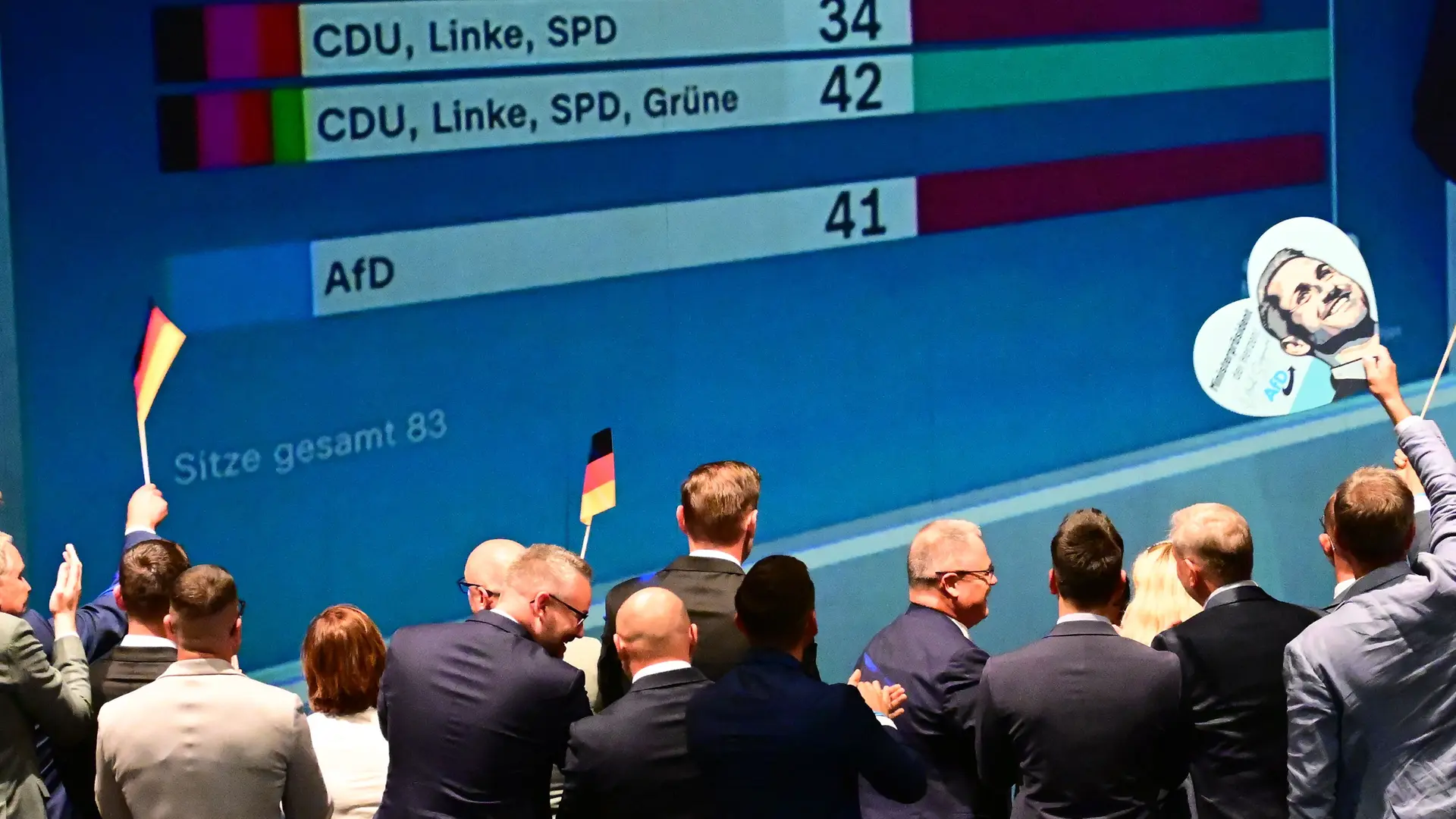
Monday, September 23, 2024 – The political landscape in the German state of Saxony-Anhalt is complex following its state election, as forming a government with an absolute majority proves difficult. The far-right AfD emerged as the election's victor, securing 43.8 percent of the vote and 39 out of 83 seats in the state parliament. However, this leaves them three seats short of an absolute majority.
Other parties secured considerably fewer mandates: the CDU obtained 15 seats, while the SPD, the Greens, and Die Linke each received eight seats. The new party BSW garnered five seats. This distribution makes forming traditional majority coalitions highly challenging. For instance, the combined seats of the CDU, SPD, and the Greens amount to only 31, and even with Die Linke, they would reach just 39 seats, insufficient for a majority.
The situation necessitates consideration of less conventional alliances. BSW's support could be decisive for several coalitions, but political disagreements make cooperation difficult. The CDU has previously ruled out cooperation with both the AfD and Die Linke. This presents challenges, even though, theoretically, a five-party coalition comprising the CDU, SPD, Greens, Die Linke, and BSW would be mathematically possible, requiring the overcoming of significant political reservations.
The AfD has expressed its willingness to initiate discussions with all parties represented in the parliament. Party representatives specifically mentioned the CDU and BSW as potential partners. The party does not rule out forming a minority government either. The post-election negotiations are expected to be lengthy and will require substantial political compromises to ensure stability in the state's future governance.