Sceye and SoftBank Demonstrate First Ground-Based Laser Ranging of Stratospheric Platform
US-based Sceye and Japan's SoftBank Corp. have successfully demonstrated ground-based laser ranging to a High Altitude Platform System (HAPS) in the stratosphere. The achievement advances optical free-space communication between ground, stratosphere, and space.
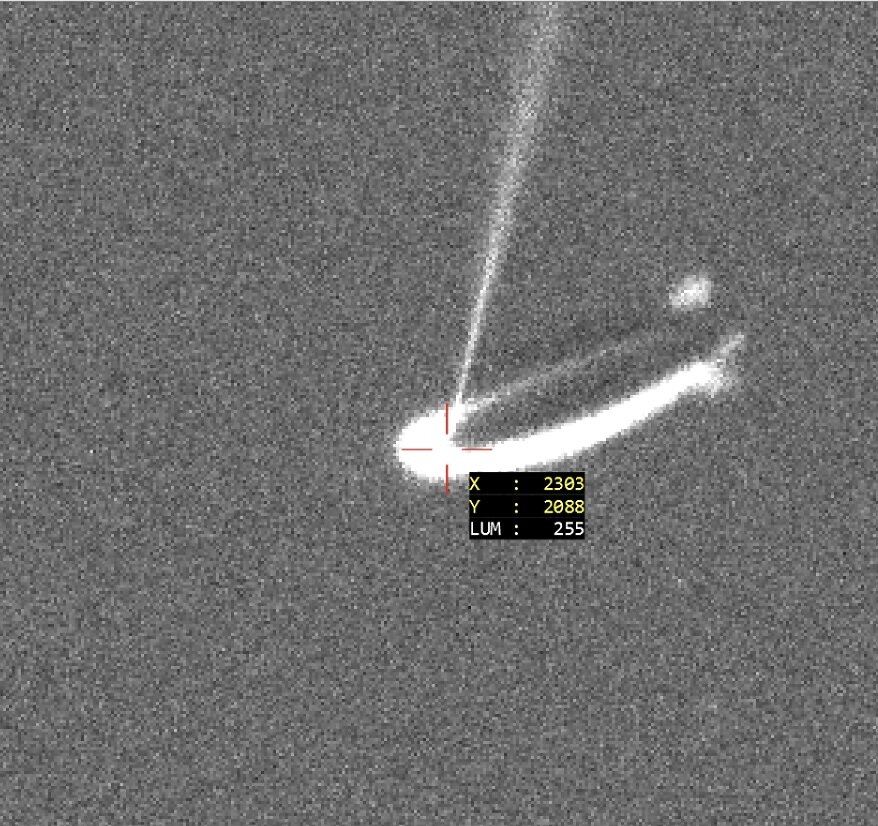
Sceye, a US aerospace and materials science company developing stratospheric High Altitude Platform Systems (HAPS), announced the world's first laser ranging demonstration to a HAPS. The demonstration was conducted by SoftBank Corp. in collaboration with Hitotsubashi University and the National Institute of Polar Research (NIPR), utilizing Sceye's HAPS platform during its ST1 flight.
The experiment aimed to collect data for future optical free-space communication, connecting ground, stratosphere, and space. NIPR developed a corner cube reflector installed on Sceye's HAPS, while SoftBank developed an integrated reflector assembly. Sceye had previously completed the first HAPS flight over Japan.
A compact, portable laser ranging system, based on the Omni-SLR system developed by Hitotsubashi University, was deployed on the ground. This system successfully tracked Sceye's HAPS in real-time within the stratosphere and continuously received reflected laser signals.
Mikkel Vestergaard Frandsen, founder and CEO of Sceye, stated that the demonstration highlights the possibilities of establishing reliable stratospheric infrastructure. During the test, the platform supported direct connections to end devices, edge computing, and drone communication. This laser ranging capability paves the way for secure, global data transfer.
Data gathered from the experiment, including atmospheric light attenuation, will help define operational requirements for optical communication technology on future HAPS. Optical free-space communication is emerging as a key technology for next-generation networks, linking satellites, HAPS, and terrestrial infrastructure.