Science of Screen Color Shift Explained
LCD screens exhibit color shifts due to liquid crystal light control dependent on viewing angle, while OLED displays maintain consistent colors. Advancements address these differences.
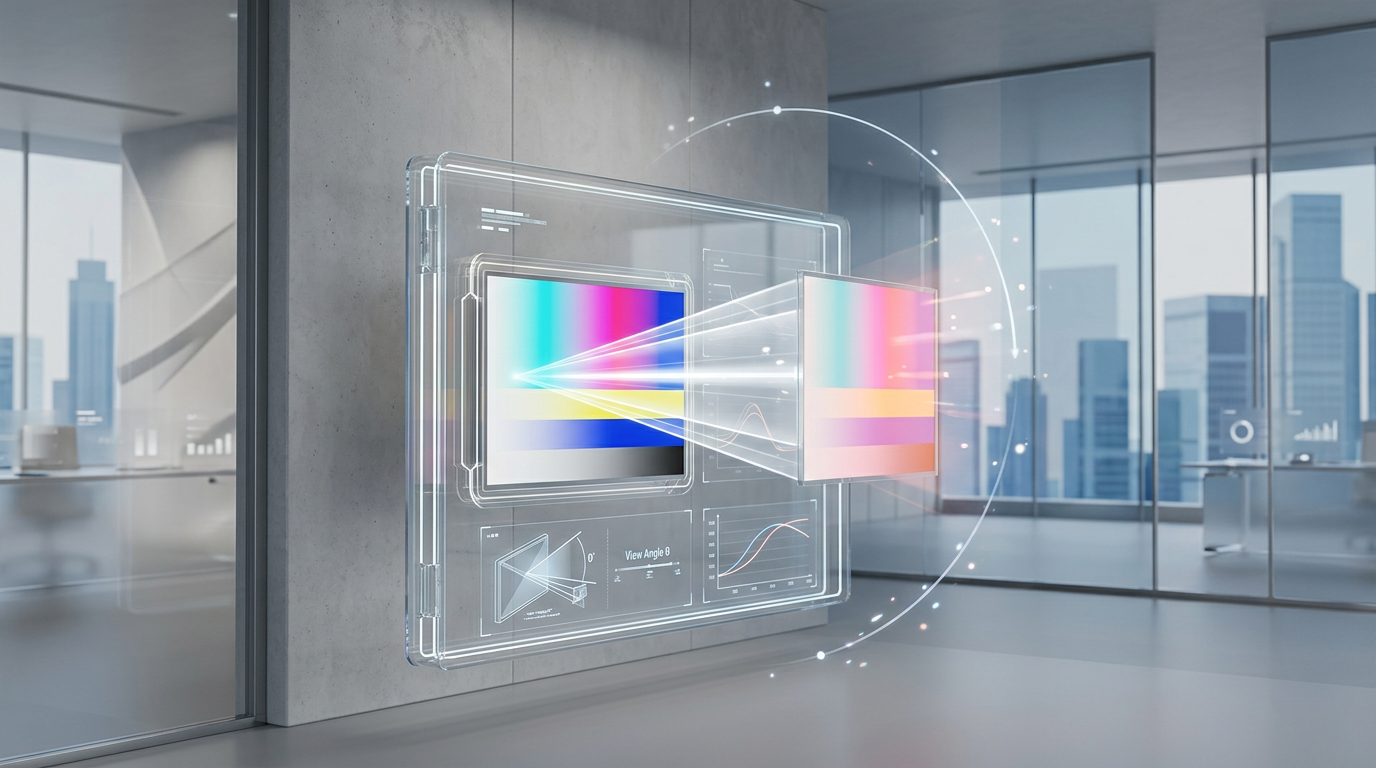
The phenomenon of a screen's colors shifting or fading when viewed from an angle is a direct result of the underlying display technology. Liquid Crystal Displays (LCDs) control light via liquid crystals, which can distort light paths when viewed off-axis, leading to color inaccuracies. In contrast, Organic Light-Emitting Diode (OLED) displays, where each pixel emits its own light, maintain color fidelity across a much wider range of viewing angles.
LCD screens function by modulating light from a backlight using liquid crystals. When viewed directly, these crystals align to produce accurate colors. However, as the viewing angle increases, the light's path through the crystal layer is distorted, a problem often termed the "shutter effect." Twisted Nematic (TN) panels show the most drastic shifts, while Vertical Alignment (VA) panels offer moderate improvement, and In-Plane Switching (IPS) panels provide significantly better viewing angles due to optimized crystal alignment.
OLED technology bypasses these limitations by eliminating the need for a backlight and liquid crystal layer. Each pixel generates its own light, ensuring that colors remain consistent regardless of the viewer's position, making OLED the preferred choice for premium devices like smartphones and televisions. Many OLED panels achieve viewing angles up to 178 degrees while preserving color accuracy.
Ongoing technological advancements are also improving LCD performance. Mini-LED technology refines backlight control to mitigate color shift, and Quantum Dot technology enhances color consistency using light-emitting nanomaterials. While VA panels might lag in viewing angles, they often excel in contrast ratios, highlighting the trade-offs in display technologies.
For users, evaluating a screen's performance from various angles can indicate panel quality, especially for shared viewing or collaborative tasks where IPS and OLED panels typically offer superior results. Ambient lighting conditions can also influence the perception of color distortion, making proper setup crucial for optimal viewing.