Scientists Re-evaluate Early Space Weather Event
New research suggests the 1841 Exeter railway disruption, previously cited as the earliest space weather impact, likely occurred several years later.
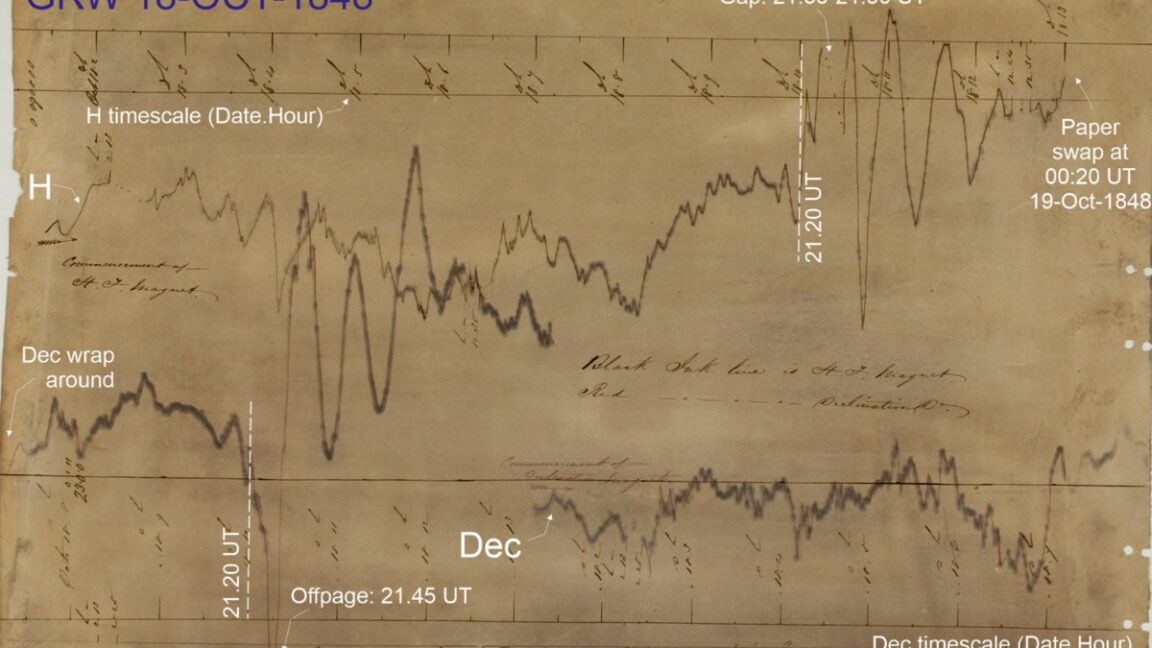
New analysis has cast doubt on a 1841 report detailing a significant space weather event that disrupted railway travel in Exeter, England. This event, if accurate, would have been the earliest recorded impact of its kind prior to the major Carrington Event of 1859.
The study, published in the journal Space Weather, proposes that the October 1841 date is likely a typo. Researchers now believe the railway disruption actually occurred several years later. This finding refines our understanding of when and how emerging technologies first encountered the effects of space weather.
"Space weather is often discussed as a modern challenge because of our dependence on technologies such as satellites, communications systems and electricity networks," said co-author Jim Wild of Lancaster University. "What this study shows is that society has been experiencing the effects of space weather on technology for almost as long as electrical technologies have existed. The Exeter train delay is a fascinating story because it sits right at the point where emerging technologies first began to encounter the realities of the space environment."
The Carrington Event of 1859 remains the most powerful geomagnetic storm on record, causing widespread auroras and disrupting telegraph systems. Telegraphy, a nascent technology in the 1830s, was affected by geomagnetically induced currents, likely from a coronal mass ejection. Some operators found they could transmit messages even after disconnecting power, relying solely on the auroral current.