Scrapping New Gas Cars for EVs Better for Environment, Study Finds
A new study indicates that replacing a new gasoline-powered car with an electric vehicle, even by scrapping the new car, results in lower environmental impact than repairing the old one.
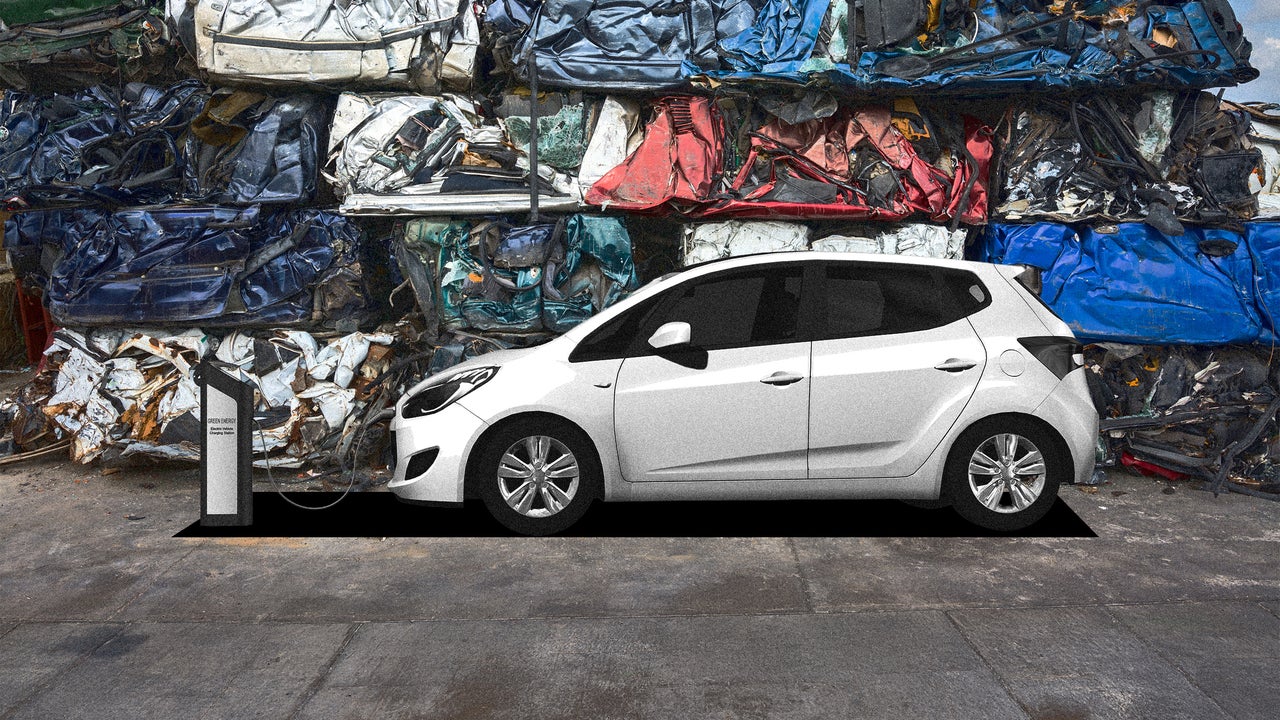
A recent study from the University of California, Santa Cruz, suggests that scrapping a new gasoline-powered car and switching to an electric vehicle (EV) is more environmentally beneficial than extending the life of the gasoline car through repairs.
The research, published in the journal Science, analyzed emissions from both vehicle manufacturing and operation. The conclusion holds even when accounting for the emissions associated with EV battery production and the use of fossil fuels in the electricity grid.
Lead author Elliott Campbell admitted to being surprised by the findings. "Even for the most efficient gasoline cars, it made sense to scrap them immediately if the goal is to reduce greenhouse gas emissions," Campbell stated.
The study modeled over 400 gasoline and electric vehicle models, considering factors such as vehicle efficiency, electricity sources, mileage, and battery manufacturing emissions. In over 90% of scenarios, switching to an EV by scrapping the gasoline car resulted in greater emission reductions.
Campbell hopes the findings will encourage policymakers to promote scrappage and replacement incentive programs that support the transition to low-emission vehicles. The environmental advantages of EVs are expected to improve further as renewable energy adoption increases and battery recycling technology advances.