Senckenberg Announces Research Program on Biodiversity
The Senckenberg Centre for Human Evolution and Palaeoenvironment has announced its program for July to September 2026, focusing on analyzing Earth's system dynamics and researching biodiversity. The program includes several new exhibitions and events.
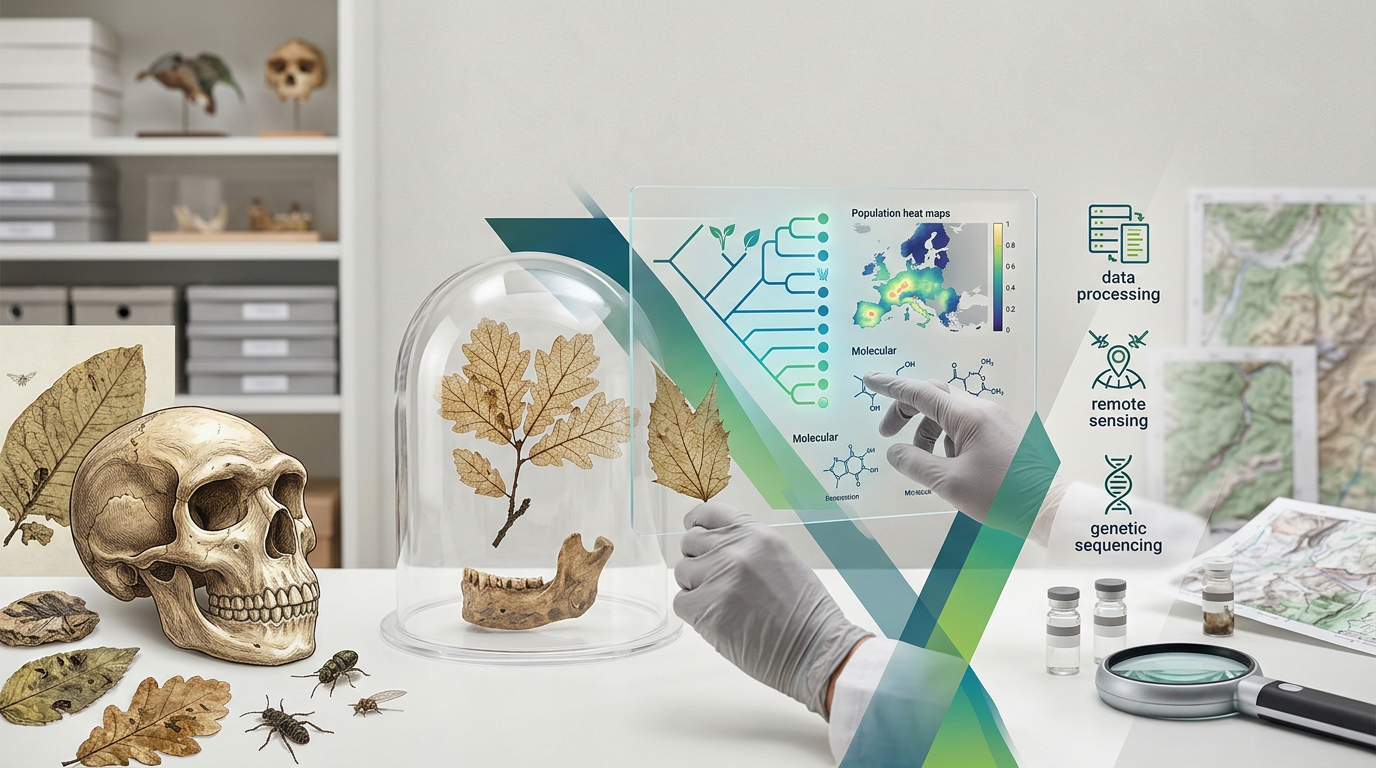
The Senckenberg Centre for Human Evolution and Palaeoenvironment has unveiled its program for July through September 2026, emphasizing the systematic analysis of Earth's dynamics and the study of biodiversity for the future.
The institution, recognized for its extensive collections and research infrastructure, is featuring several new exhibitions. In Frankfurt, "Ganz schön warm hier! Leben und Sterben in Messel" (It's quite warm here! Life and Death in Messel) offers a glimpse into life 47 million years ago at the Messel Pit. In Görlitz, "Deutschlands Bodenschätze" (Germany's Mineral Resources) highlights the nation's mineral wealth, while "iNuversumm" in Dresden explores the intricate world of insects.
Beyond permanent and temporary displays, Senckenberg is hosting various events. In September 2026, "UNESCO Weltnaturerbe vor der Haustür: Die Grube Messel" (UNESCO World Natural Heritage on the doorstep: The Messel Pit) will provide in-depth presentations on the Senckenberg's natural history research and its role in protecting heritage sites. The center also regularly disseminates findings from current research, such as a recent study detailing the status of turtle populations in Germany.
Senckenberg's research spans a wide array of disciplines, from marine biology and laboratory experiments to fieldwork and the study of ancient life forms. Four core research areas—Biodiversity, Systematics, and Evolution; Biodiversity and Humans; Biodiversity and Climate; and Biodiversity and Earth System Dynamics—form the scientific backbone of the institution. With over 45 million collection objects, Senckenberg houses one of the world's largest natural history collections.