Senckenberg Center Announces New Research and Exhibitions
The Senckenberg Centre for Human Evolution and Palaeoenvironment has announced new research findings and upcoming exhibitions focusing on Earth's systems, biodiversity, and natural history.
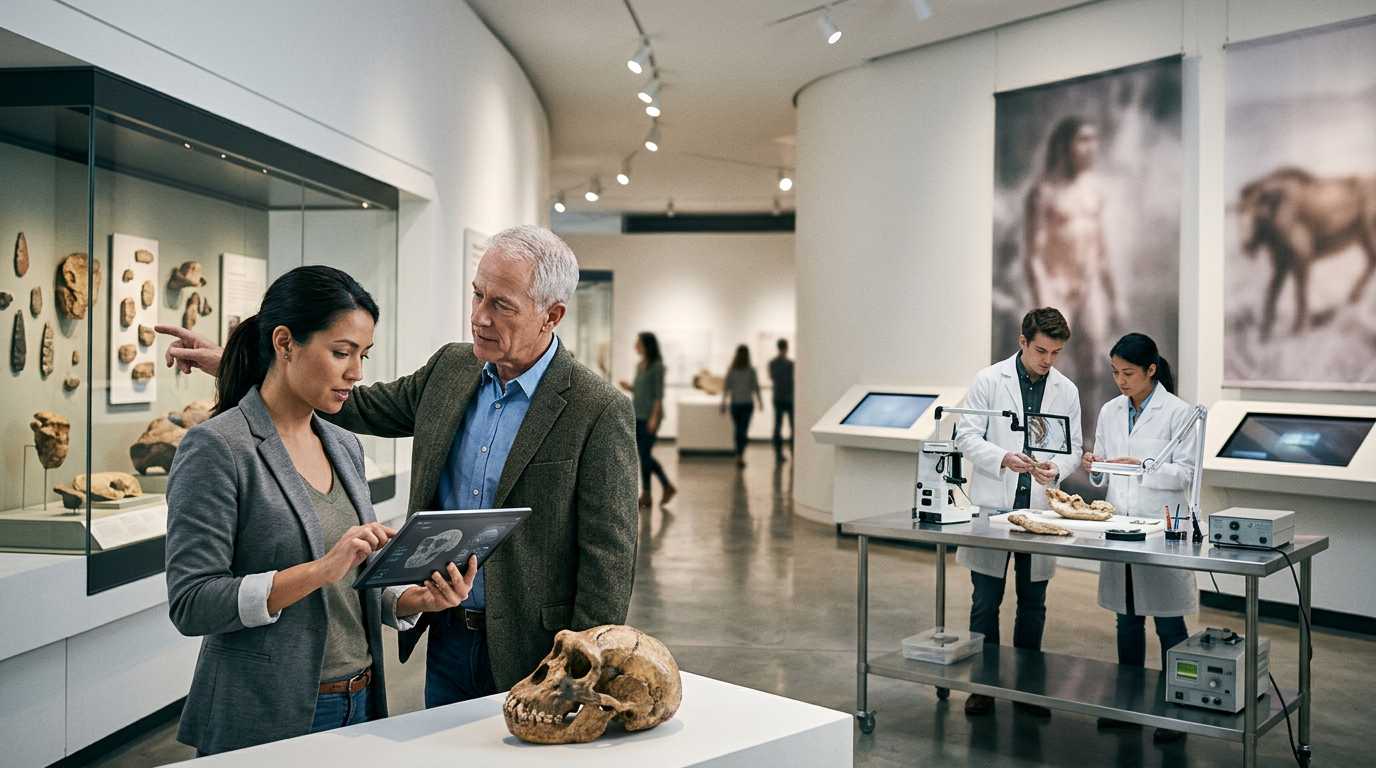
The Senckenberg Centre for Human Evolution and Palaeoenvironment is highlighting recent research and upcoming public events that delve into the dynamics of the Earth system and biodiversity. These initiatives aim to engage the public with scientific exploration and discoveries.
Recent research includes a study on turtles in Germany, revealing that 14 out of 15 identified species are non-native. Another notable project explored "Building with Tree and Time – Baubotanik as a Future Model," examining the use of trees as construction materials.
Senckenberg's museums in Frankfurt, Dresden, and Görlitz are also preparing new exhibitions. The Frankfurt museum will launch "Ganz schön warm hier! Leben und Sterben in Messel" (Quite Warm Here! Life and Death in Messel), showcasing life 47 million years ago. Görlitz will present "Deutschlands Bodenschätze" (Germany's Subterranean Treasures), and Dresden will feature "iNuversumm – Raum und Zeit für Insekten" (Insect Space and Time).
The center's research spans biodiversity, systematics, evolution, and the interactions between biodiversity, humans, climate, and Earth system dynamics. Senckenberg holds a vast collection of over 45 million specimens, ranking among the world's largest natural history collections.
Future events include a screening of the film "Tomorrow – Die Welt ist voller Lösungen" (Tomorrow – The World is Full of Solutions), followed by a discussion, aimed at fostering broader public understanding of scientific topics.