Senckenberg Centre Focuses on Human Evolution and Ancient Environments
The Senckenberg Centre for Human Evolution and Palaeoenvironment has established a new strategic focus on human evolution and ancient environments. These new research areas aim to expand scientific understanding of the past.
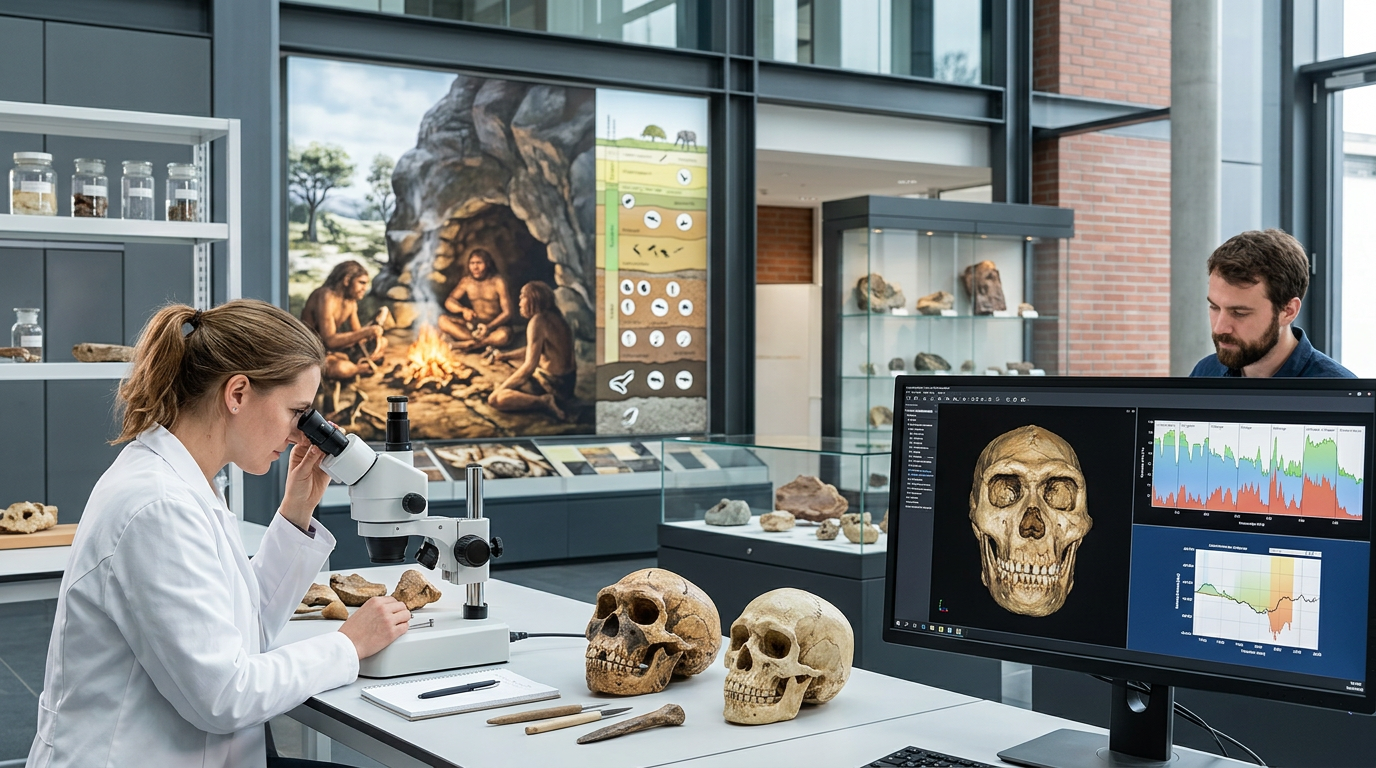
The Senckenberg Centre for Human Evolution and Palaeoenvironment has announced a new strategic direction, concentrating its research efforts on understanding human evolution and the study of ancient environments. This shift signifies a commitment to interdisciplinary research bridging palaeontology, archaeology, and environmental science.
The centre's expanded scope will investigate the complex interplay between human development and the changing planetary conditions throughout history. Key areas of focus include analysing fossil records, reconstructing ancient ecosystems, and tracing human migration patterns in relation to environmental shifts.
This initiative aims to provide a comprehensive picture of humanity's past by examining how climate, geology, and biodiversity have influenced human origins and diversification. The research will employ a range of methodologies, from fieldwork and specimen analysis to advanced computational modelling.
By delving into Earth's prehistoric past, the Senckenberg Centre seeks to contribute significant insights into the long-term trajectory of human species and the environmental factors that have shaped our existence. The findings are expected to offer valuable perspectives for understanding contemporary environmental challenges.