Senckenberg Research Focuses on Insect Morphology and Phylogeny
The Senckenberg Centre for Human Evolution and Palaeoenvironment conducts entomological research, emphasizing the structure and evolution of insects, particularly beetles. Its collection holds millions of specimens.
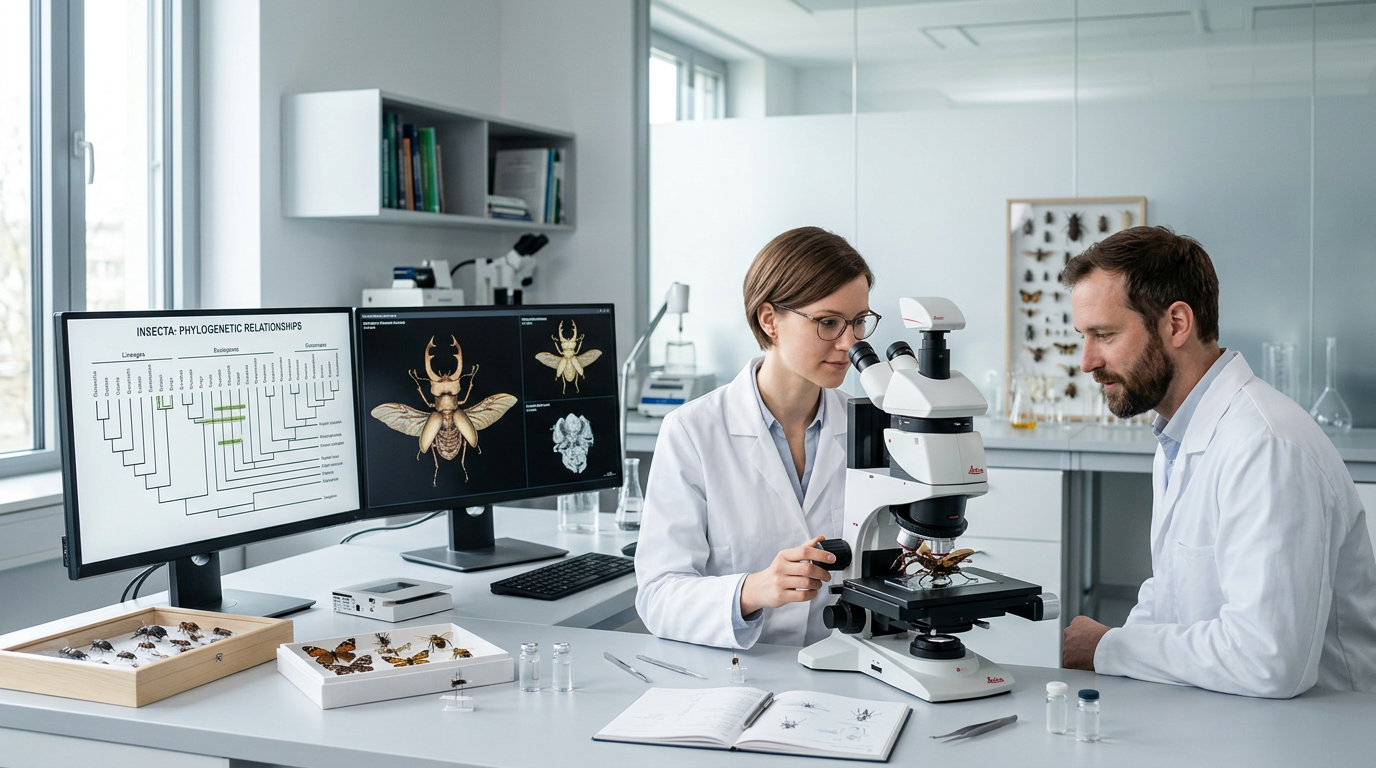
The Senckenberg Centre for Human Evolution and Palaeoenvironment is engaged in entomological research, with a primary focus on the comparative and functional morphology, phylogeny, taxonomy, and faunistics of insects, especially beetles (Coleoptera). Research topics include the exoskeleton, musculature, nervous system, and glands of insects.
Long-term research strands focus on the morphology of female and male genitalia. The aim is to improve the use of genitalic morphology in phylogenetic and taxonomic research, and to develop evolutionary scenarios for reproductive biology traits. The work also investigates the evolution of sex-specific structures and their role in speciation.
The Senckenberg collection of Coleoptera comprises approximately 2 million specimens, representing around 80,000 species from all zoogeographical regions. This extensive collection serves as a significant resource for insect research, holding primary types for a large number of taxa.
Research projects involve collaboration with a wide network of international partners. Efforts are also made to transfer mechanisms from insect skeletal-muscular systems into practical applications within bionics. The center also organizes the biennial "Dresden Meetings on Insect Phylogeny."