Senckenberg's Museum of Mineralogy and Geology holds significant German research collections
The Senckenberg Centre for Human Evolution and Palaeoenvironment's Museum of Mineralogy and Geology in Dresden maintains one of Germany's most significant collections for geosciences research, comprising approximately 400,000 specimens.
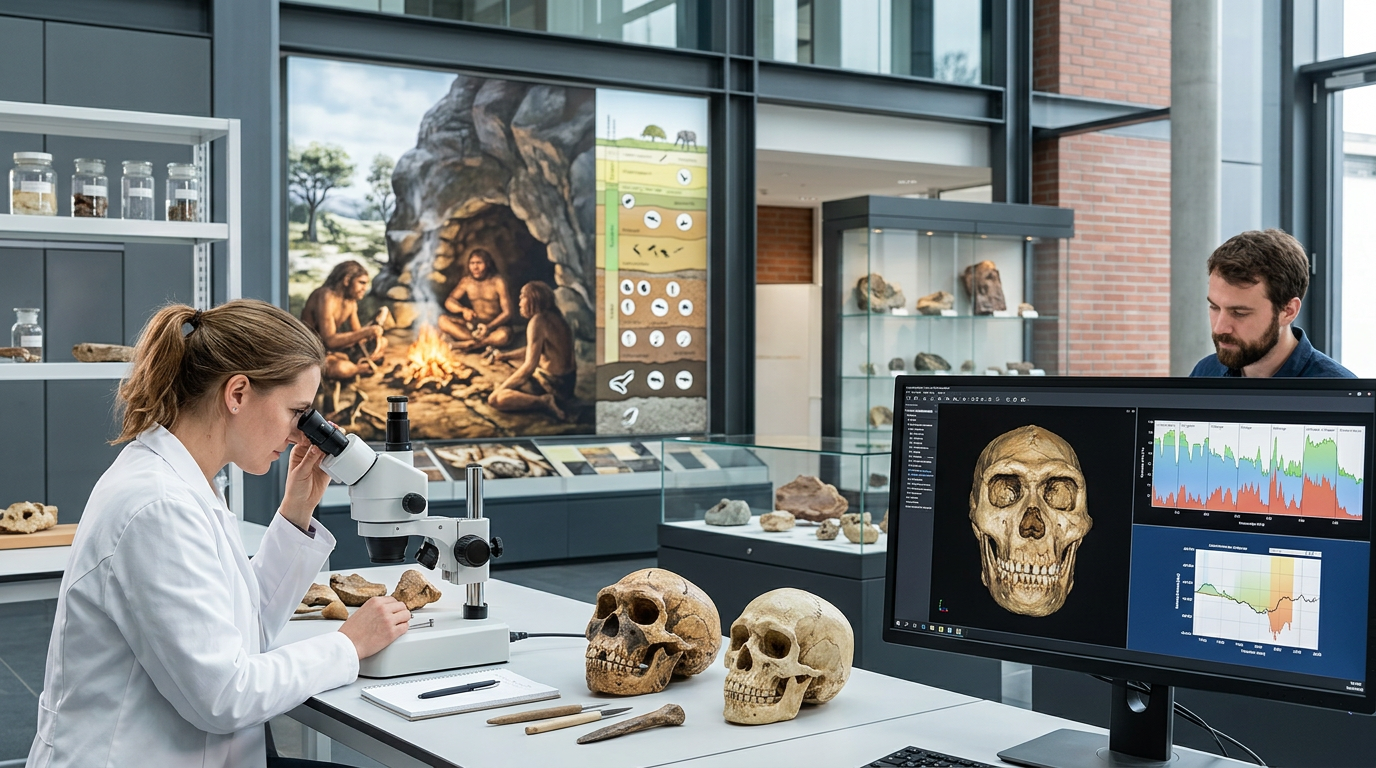
The Museum of Mineralogy and Geology at the Senckenberg Centre for Human Evolution and Palaeoenvironment in Dresden houses one of Germany's most important collections for geosciences research. The institution holds approximately 400,000 minerals, fossils, and stones.
With specimens first mentioned in 1587, the museum stands as the world's oldest geoscience institution. Its collections include numerous type specimens and original research items of fossils and minerals, fundamental for scientific study.
The museum is structured into five sections: Mineralogy, Petrography, Paleozoology, Paleobotany, and Geochronology. Complementing its research capabilities, the geoscience library offers access to valuable historical publications and contemporary scientific literature.
Led by Professor Dr. Ulf Linnemann, with Dr. Katja Mende serving as his assistant, the department focuses on research and the preservation of its extensive collections, which are critical for understanding Earth's history.