Software update improves exoplanet imaging for James Webb Space Telescope
Researchers have developed a new software package that optimizes physical telescope modeling to significantly reduce imaging noise when observing exoplanets.
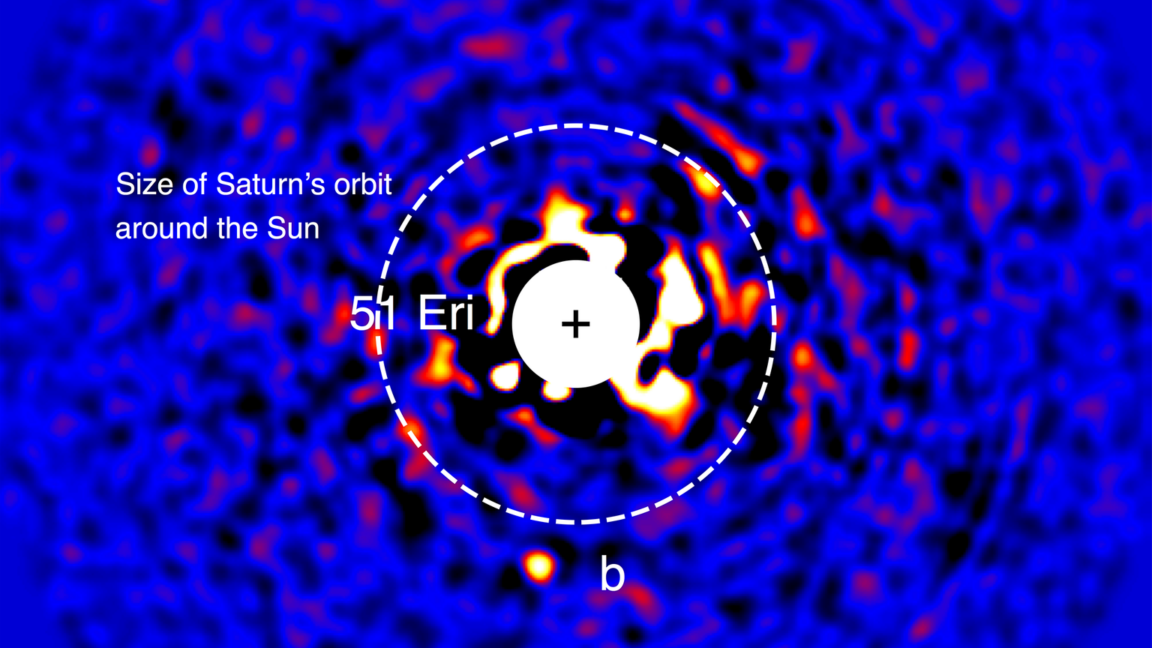
A team of researchers has introduced a new software solution designed to enhance the imaging capabilities of the James Webb Space Telescope regarding exoplanets. The software aims to address the significant challenge of capturing light from planets that are frequently overshadowed by the extreme brightness of their host stars.
While existing hardware tools like coronagraphs are used to block stellar light, their efficacy is often limited by minor fluctuations in the telescope's orientation and hardware configurations between observation periods. The new software addresses these inconsistencies by optimizing a physical model of the telescope, allowing for clearer data interpretation.
The core of this advancement involves refining the point spread function, which describes how a telescope distorts a point of light due to hardware imperfections and alignment limitations. By mathematically modeling these distortions, the software enables researchers to produce cleaner images, facilitating the study of planetary atmospheres and potential conditions for life.