Stainless Steel Sheath Outperforms Aluminum Foil in Southeast Asian Food Plant Heating Elements
Heating elements with stainless steel sheaths offer a 3-5x longer service life than aluminum foil heaters in Southeast Asian food processing plants due to high humidity conditions.
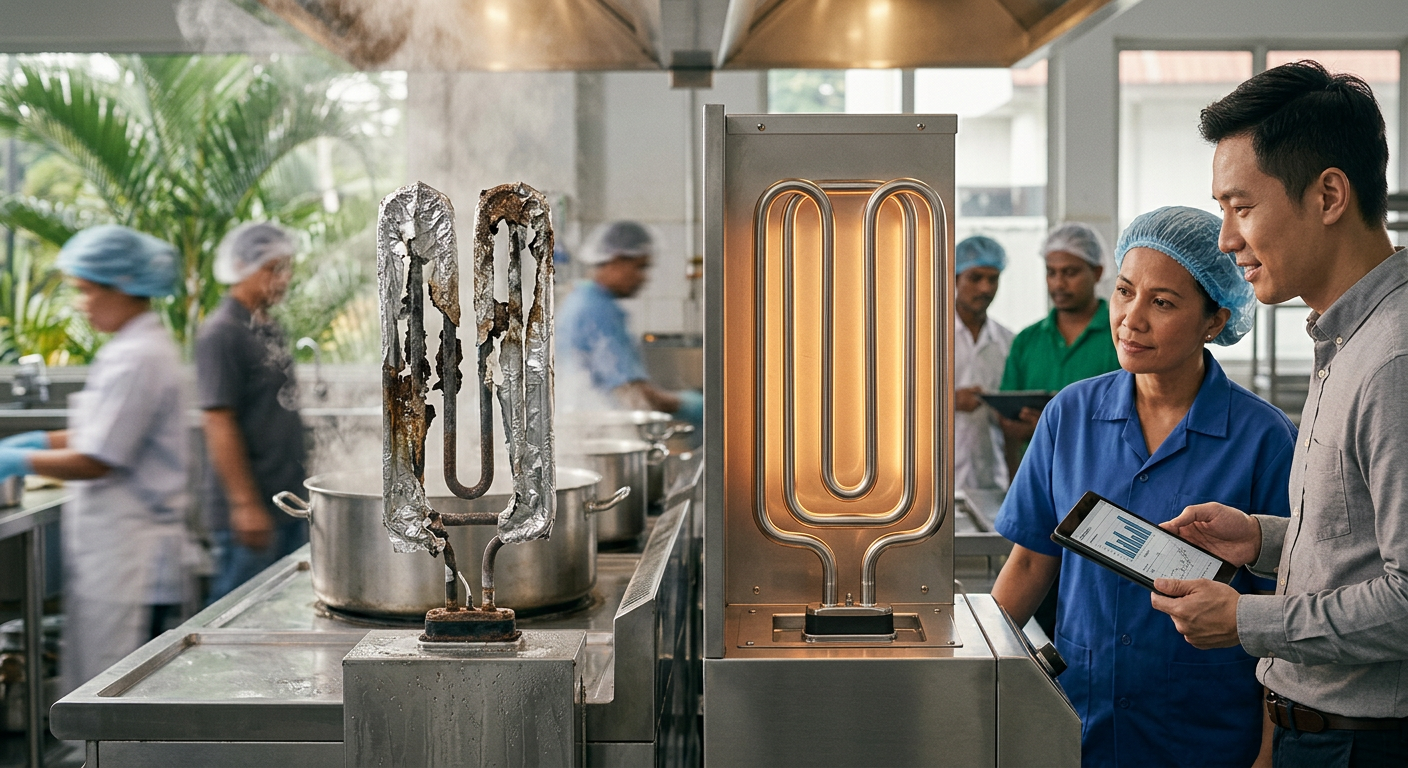
Heating elements encased in stainless steel (SS304/316) demonstrate a significantly longer service life in Southeast Asian food processing plants compared to aluminum foil heaters, particularly under conditions of high humidity and exposure to cleaning chemicals. The typical lifespan for stainless steel is 3-5 times that of aluminum foil, which often fails within 18-24 months.
The reduced service life of aluminum foil heaters is attributed to the high atmospheric humidity prevalent in Southeast Asian food facilities, compounded by factors such as condensation and continuous environmental exposure. When combined with common food industry cleaning agents like peracetic acid and sodium hypochlorite, corrosion rates are substantially accelerated. The ideal laboratory conditions, on which most manufacturers' lifespan estimates are based, do not reflect the realities of factory environments.
Stainless steel sheathed heating elements utilize a seamless tubular design that provides a hermetic barrier around the resistance wire. This construction effectively isolates the internal components from ambient moisture and chemicals. In contrast, aluminum foil heaters rely on polymer adhesives that can degrade with moisture exposure, progressively losing bond strength and risking delamination and failure.
Manufacturers like Shengzhou Jinwei Electric Heating Appliance Co., Ltd. recommend stainless steel for process areas exposed to water, steam, or sanitizers. Aluminum foil remains suitable for dry storage and freezer applications where the risk of sterilization or wash-down cycles is minimal. The selection of heating elements should prioritize environmental suitability over sole consideration of price.