Strong El Niño Forecast Raises Concerns Over Potential Economic Impacts
The National Oceanic and Atmospheric Administration (NOAA) has issued an advisory for a potentially very strong El Niño event, with an 81% chance of intensification likely to impact global weather and economies.
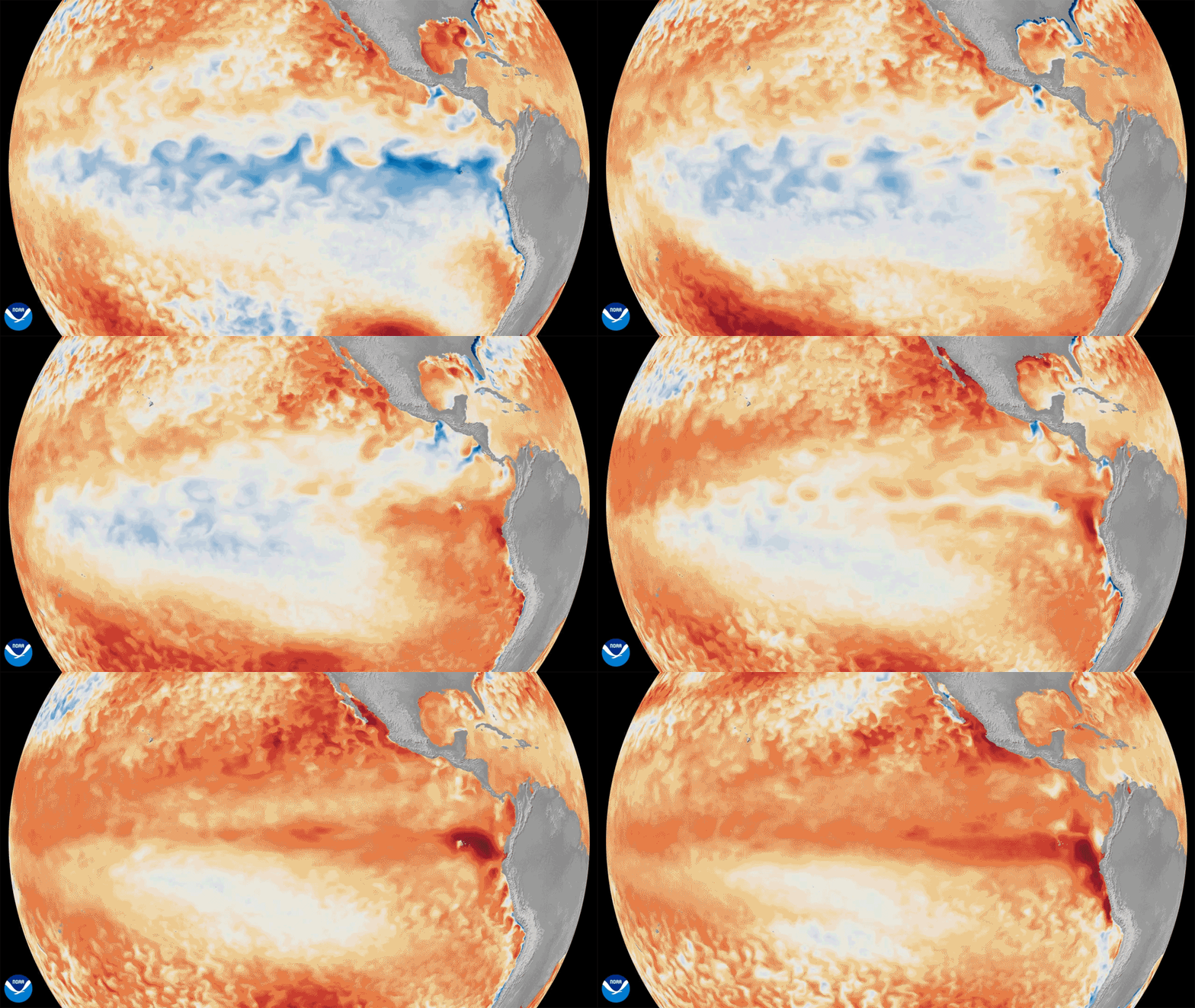
Forecasters at the National Oceanic and Atmospheric Administration’s Climate Prediction Center have issued an advisory indicating that the current El Niño event has strengthened and could become one of the strongest on record. The forecast suggests an 81% chance of a very strong El Niño occurring between October and December.
The advisory states that the current El Niño started strengthening last month and is expected to intensify through 2026, with the event likely to continue into early 2027. While the full impact of El Niño events varies, stronger occurrences can more significantly tilt the odds for expected weather outcomes, according to NOAA.
El Niño refers to the warming of surface waters in the central and eastern Pacific Ocean, which influences global weather patterns. Potential effects include fewer hurricanes in areas like Florida due to altered wind patterns, but also more severe winter weather systems and warmer temperatures in the northern United States. The southern U.S. may experience increased precipitation, including rain and snow, potentially leading to flooding.
Beyond weather disruptions, a strong El Niño could have substantial economic consequences. A 2023 study estimated that El Niño events can cost the global economy trillions of dollars, referencing the 1997-1998 event which caused losses of $5.7 trillion. Celeste Saulo, Secretary-General of the World Meteorological Organization, noted that El Niño's impacts extend across agriculture, energy, trade, water resources, and supply chains, affecting entire regions.