Study Finds Internet Shutdowns May Increase Public Support
New research indicates that individuals who experienced internet shutdowns reported increased support for such measures.
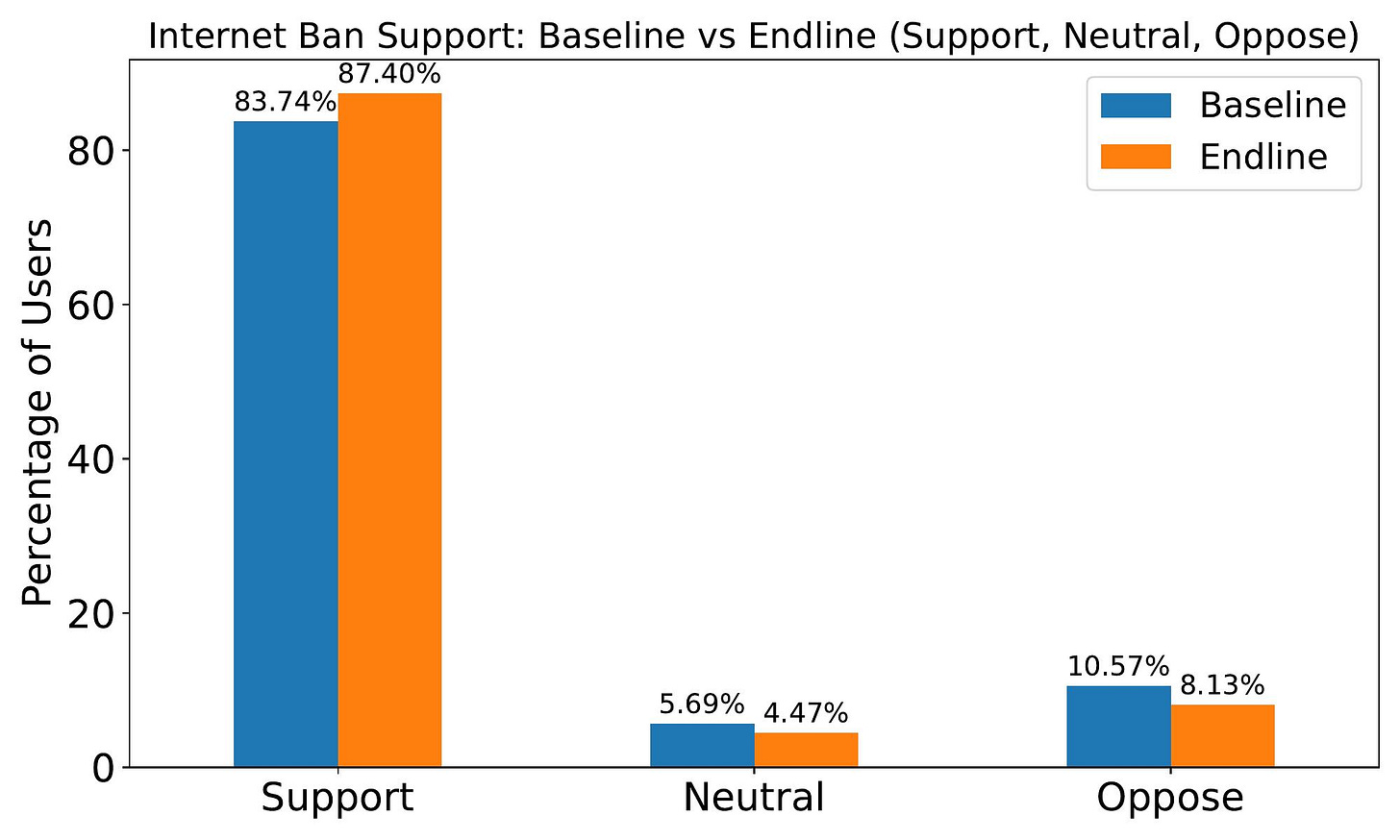
Medianama has released research findings that challenge the common assumption about how internet shutdowns affect public opinion. A study conducted in India found that participants who personally experienced internet restrictions paradoxically reported increased support for these measures. This contradicts the hypothesis that firsthand difficulties would lead to greater opposition.
The experiment involved 250 participants in rural North India who were compensated with approximately two days' local wages to voluntarily disconnect from the internet for 48 hours. They were surveyed about their attitudes toward shutdowns before and after the period of disconnection. Surprisingly, the post-experience survey revealed a rise in participants' support for internet shutdowns.
Qualitative analysis of participant interviews shed light on this phenomenon. Many respondents reported substituting their internet time with other tasks and viewed the disconnection as a "digital detox," which seemed to mitigate the negative impacts of being offline. This suggests that the perceived inconvenience may be offset by other factors influencing user experience.
Internet shutdowns have become a global concern, used by governments for various reasons, from national security to exam integrity and protest control. However, the study highlights a potential unintended consequence: that experiencing such shutdowns may not necessarily decrease public approval, particularly in societies heavily reliant on digital infrastructure for daily life, as is the case in parts of India.