Study Identifies Caspase-11 as Key Driver of Bone-Resorbing Cell Formation
Researchers at Chonnam National University have identified the enzyme caspase-11 as a critical factor in the development of osteoclasts, cells that break down bone. The findings may pave the way for new osteoporosis treatments.
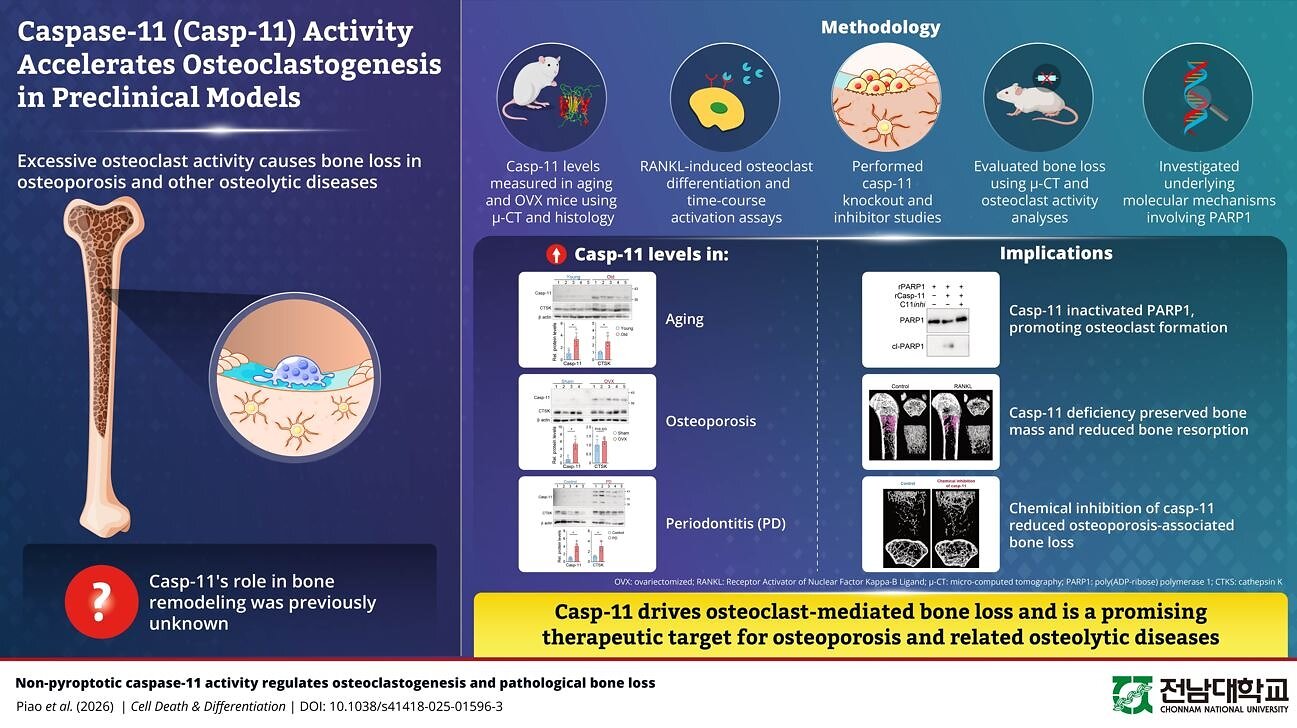
Chonnam National University researchers identified the enzyme caspase-11 as a key regulator in the development of osteoclasts, the cells responsible for bone resorption. The study, published in Cell Death & Differentiation, suggests new therapeutic targets for osteoporosis and other bone-loss disorders.
Osteoporosis affects millions globally, leading to weakened bones and increased fracture risk. The condition arises when bone breakdown exceeds bone formation. While current treatments exist, their limitations and side effects highlight the need for more targeted therapies.
The research team observed elevated caspase-11 levels in models of excessive bone resorption, including aging and osteoporosis induced by ovariectomy. The enzyme proved essential for initiating osteoclast differentiation. Genetic inactivation or pharmacological inhibition of caspase-11 significantly reduced osteoclast formation and bone resorption activity, preserving bone mass.
Mechanistically, caspase-11 promotes osteoclastogenesis by inactivating PARP1, a protein that normally suppresses osteoclast development. This discovery links an inflammation-associated enzyme to a previously unknown role in bone metabolism.
Professor Jeong-Tae Koh, the study's lead, believes caspase-11 is a promising target for future drug development. The findings also suggest that molecules typically associated with immune responses may play crucial roles in other biological systems.