Study Investigates Drivers of Lava Fountains in Hawaii
Research published in the journal Science examines lava fountains at Hawaii's Kilauea volcano. Recent eruptions have provided new data to understand the causes of these phenomena.
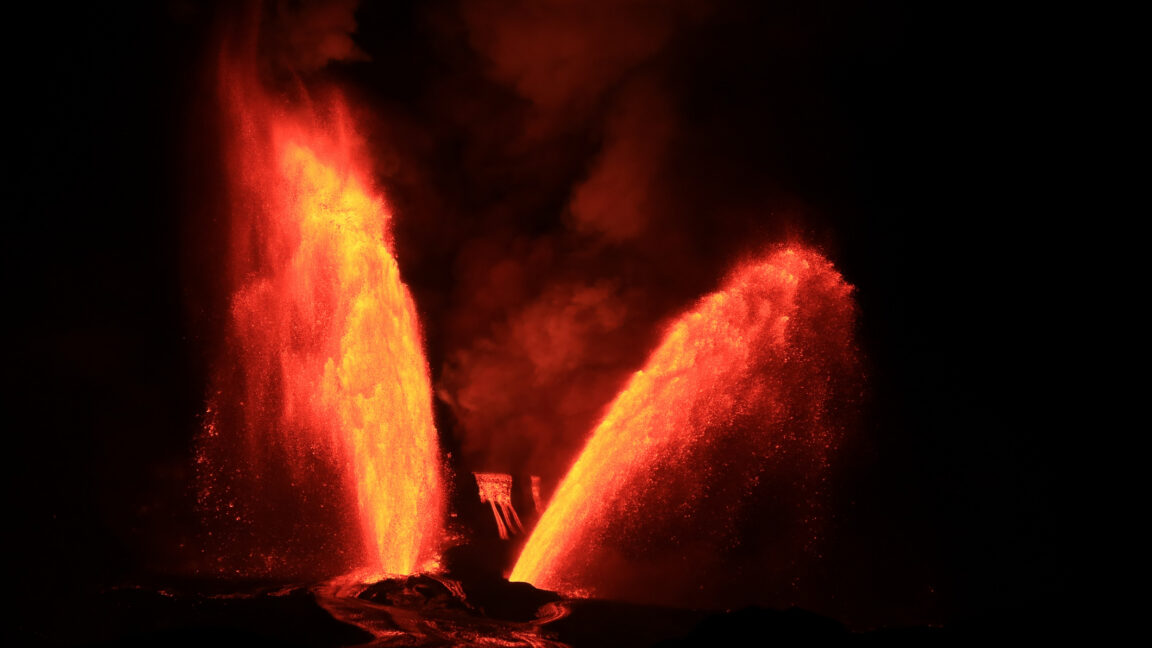
New research aims to explain what causes Hawaii's Kilauea volcano to eject lava hundreds of meters high. While hotspot-driven volcanism is often sedate, eruptions in certain locations, such as Hawaii, Mount Etna, and Iceland, can be dramatic.
The exact mechanism behind lava fountains is not fully understood. However, researchers from the United States Geological Survey (USGS) have published a detailed analysis of Kilauea's recent eruptions in the journal Science. The study compares observed lava fountaining with theoretical models describing the behavior of molten rock.
Kilauea is Hawaii's youngest and most active volcano, but its fountaining episodes have been observed only three times since 1823. Intensive study of the volcano has yielded significant information about its structure. Previous work identified several lava reservoirs within a few kilometers of the surface, and Kilauea had 35 separate data-gathering stations operating during the eruption, collecting seismic, gas, thermal, and visual data.