Supergiant star's massive bubble surprises astronomers
Researchers at Chalmers University of Technology have discovered a vast, complex bubble of gas and dust surrounding the red supergiant star DFK 52. The bubble has a mass equivalent to the Sun and extends 1.4 light-years from the star.
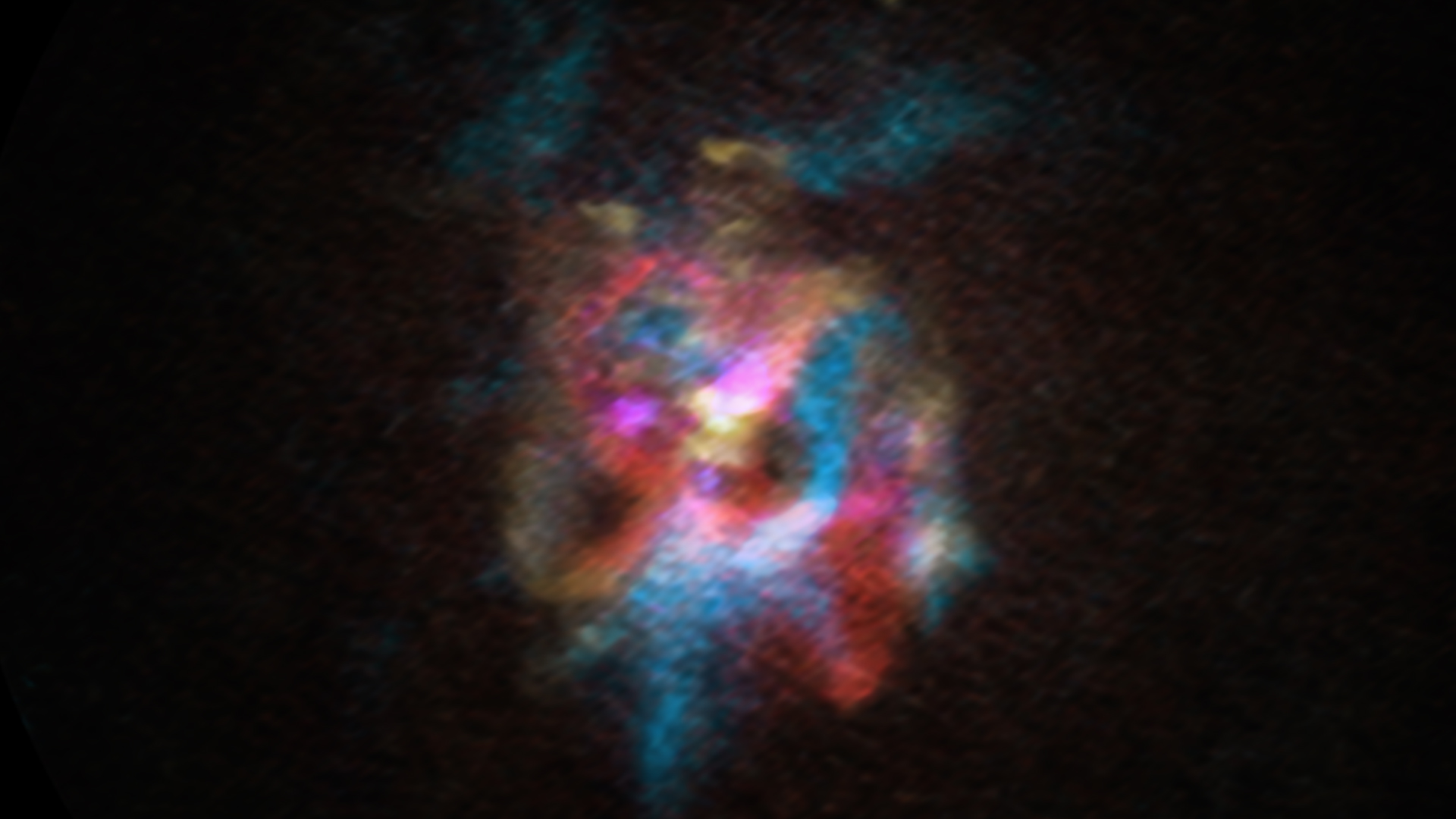
Astronomers at Chalmers University of Technology have detected an unusually large and complex bubble of gas and dust surrounding the red supergiant star DFK 52. The discovery was made using the ALMA radio telescope in Chile.
DFK 52 is comparable to the well-known star Betelgeuse, but it is enveloped by what researchers describe as a "vast, messy bubble of material." This bubble, with a mass estimated to be similar to that of the Sun, extends 1.4 light-years from the star, thousands of times wider than our solar system.
Scientists believe the bubble formed when the star ejected a significant portion of its outer layers in a powerful, sudden event approximately a few thousand years ago. "The bubble is made of material that used to be part of the star. It must have been ejected in a dramatic event, an explosion, that happened about four thousand years ago. In cosmic terms, that’s just a moment ago," explained Elvire De Beck, an astronomer at Chalmers.
The reason why DFK 52 shed such a large amount of mass without resulting in a supernova remains unclear. One hypothesis is that the star might have an undiscovered companion that aided in expelling its outer layers. The research team plans further observations to investigate this phenomenon and determine if DFK 52 could be the next supernova in our galaxy.
The findings, published in the journal Astronomy and Astrophysics, offer new insights into the late evolutionary stages of red supergiants, massive stars that are nearing the end of their lives and play a crucial role in enriching the interstellar medium with heavy elements.