Superheated star factory discovered in the early universe
Astronomers have measured the temperature of Y1, one of the most distant known star factories. Its light has traveled for over 13 billion years to reach Earth.
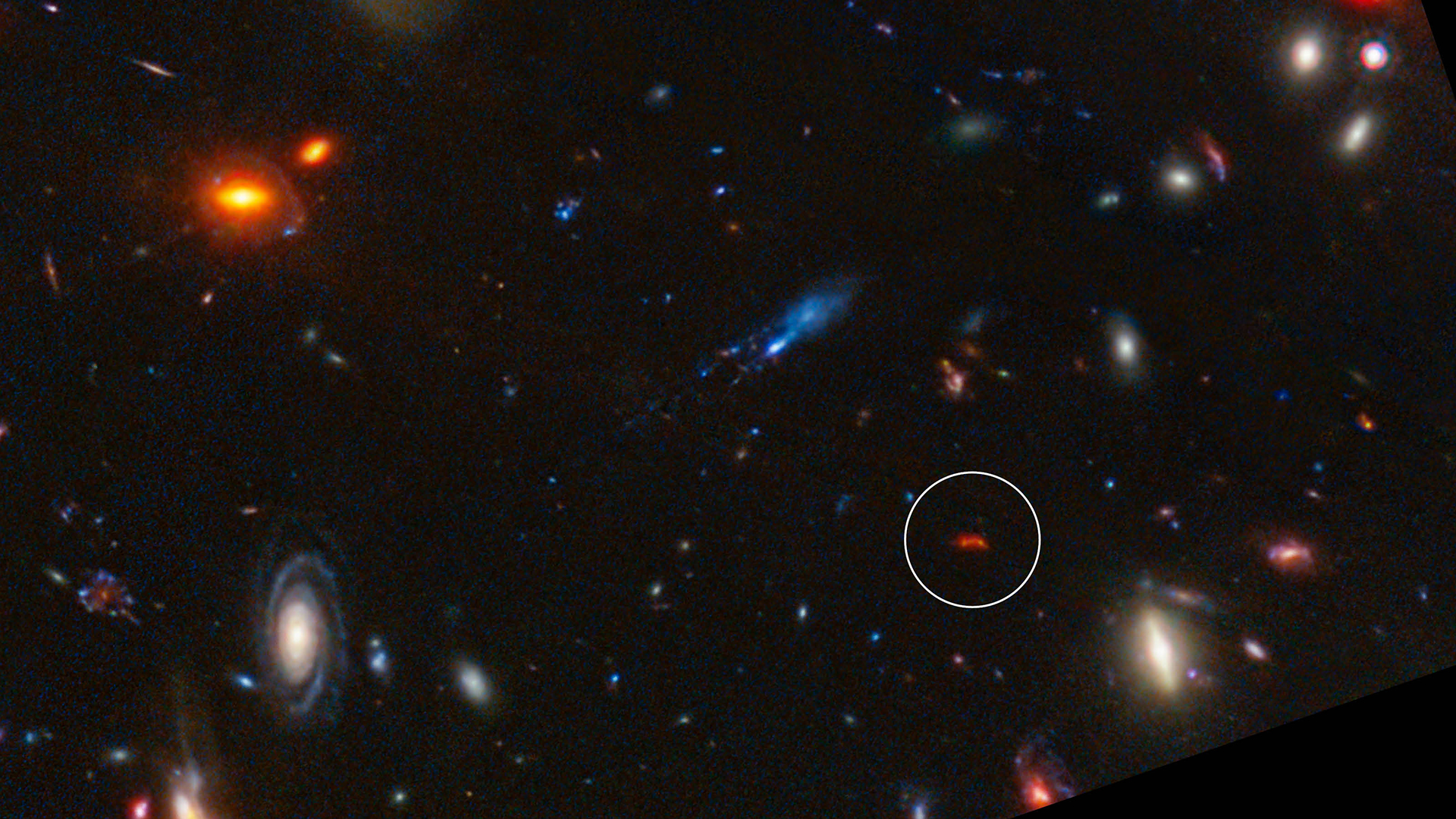
An international team of astronomers, led by researchers at Chalmers University of Technology, has measured the temperature of Y1, a galaxy acting as a prolific star factory in the early universe. The light from Y1 has traveled for over 13 billion years, offering a glimpse into the conditions under which the first stars and galaxies formed.
The scientists used the Atacama Large Millimeter/submillimeter Array (ALMA) telescope to detect the glow of dust within the galaxy. They found the dust to be approximately 90 Kelvin (-180 degrees Celsius). This temperature is significantly warmer than that observed in other comparable distant galaxies, confirming Y1 as an 'extreme star factory'.
"This confirmed that it really is an extreme star factory," said lead author Tom Bakx, an astronomer at Chalmers University of Technology. Y1 is forming stars at a rate exceeding 180 solar masses per year, a pace considered unsustainable and likely a brief phase in its evolution. This contrasts sharply with the Milky Way's current star formation rate of about one solar mass per year.
The findings may also help resolve a long-standing puzzle in astrophysics: why galaxies in the early universe appear to contain far more dust than their relatively young stellar populations would suggest. The high temperature of Y1's dust indicates that even in young galaxies lacking substantial heavy elements, a smaller amount of warmer dust can be as luminous as larger quantities of cooler dust, potentially explaining the observed abundance.