Sustainable Packaging Drives Growth in Printing Ink Industry
Demand for printing inks is shifting from traditional printing toward sustainable packaging solutions, focusing on safety and environmental impact.
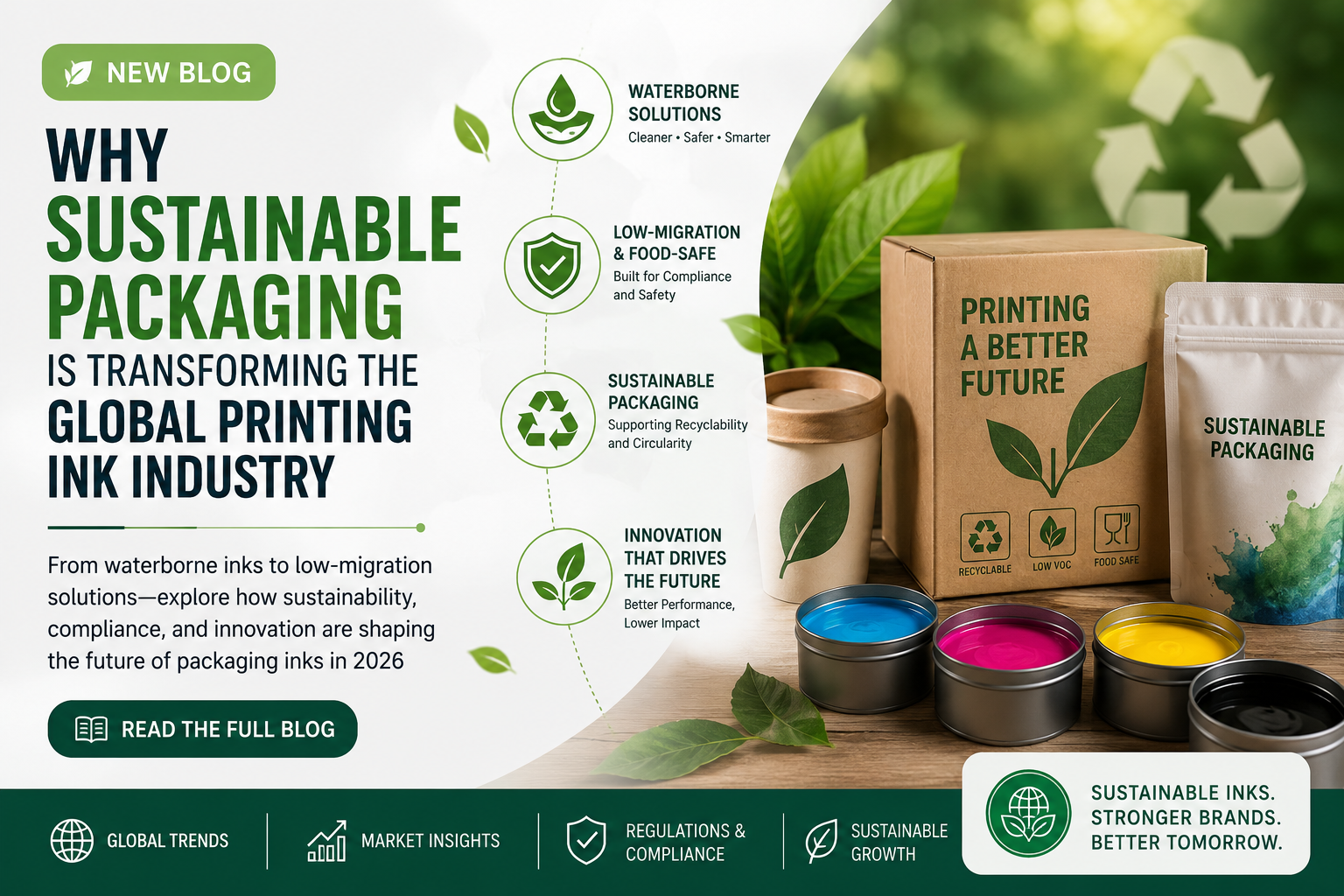
The printing ink industry is undergoing a significant transformation in 2026, with sustainable packaging emerging as a primary growth driver. The most substantial growth is now seen in packaging materials, labels, flexible films, and corrugated cardboard, supplanting traditional commercial printing.
Consumer and regulatory demands for recyclable and safe packaging are reshaping the industry's direction. This shift prioritizes inks that support sustainability, recyclability, and low migration over traditional factors like color, price, and press compatibility.
Water-based inks are increasingly replacing solvent-based formulations due to their reduced volatile organic compound (VOC) emissions and improved worker safety. While historically facing challenges in adhesion and drying speed, advancements in resin technology and additives have enhanced their performance.
Regulatory pressures, particularly for food, pharmaceutical, and cosmetic packaging, mandate stringent safety standards and minimized migration. This is accelerating the adoption of ink systems with lower chemical content and enhanced recyclability, ensuring product safety and packaging integrity throughout the supply chain.