Swedish receiver tested at world's largest radio telescope
A receiver developed by Chalmers University of Technology is being tested on the MeerKAT radio telescope in South Africa. The instrument is a prototype for the future SKA telescope.
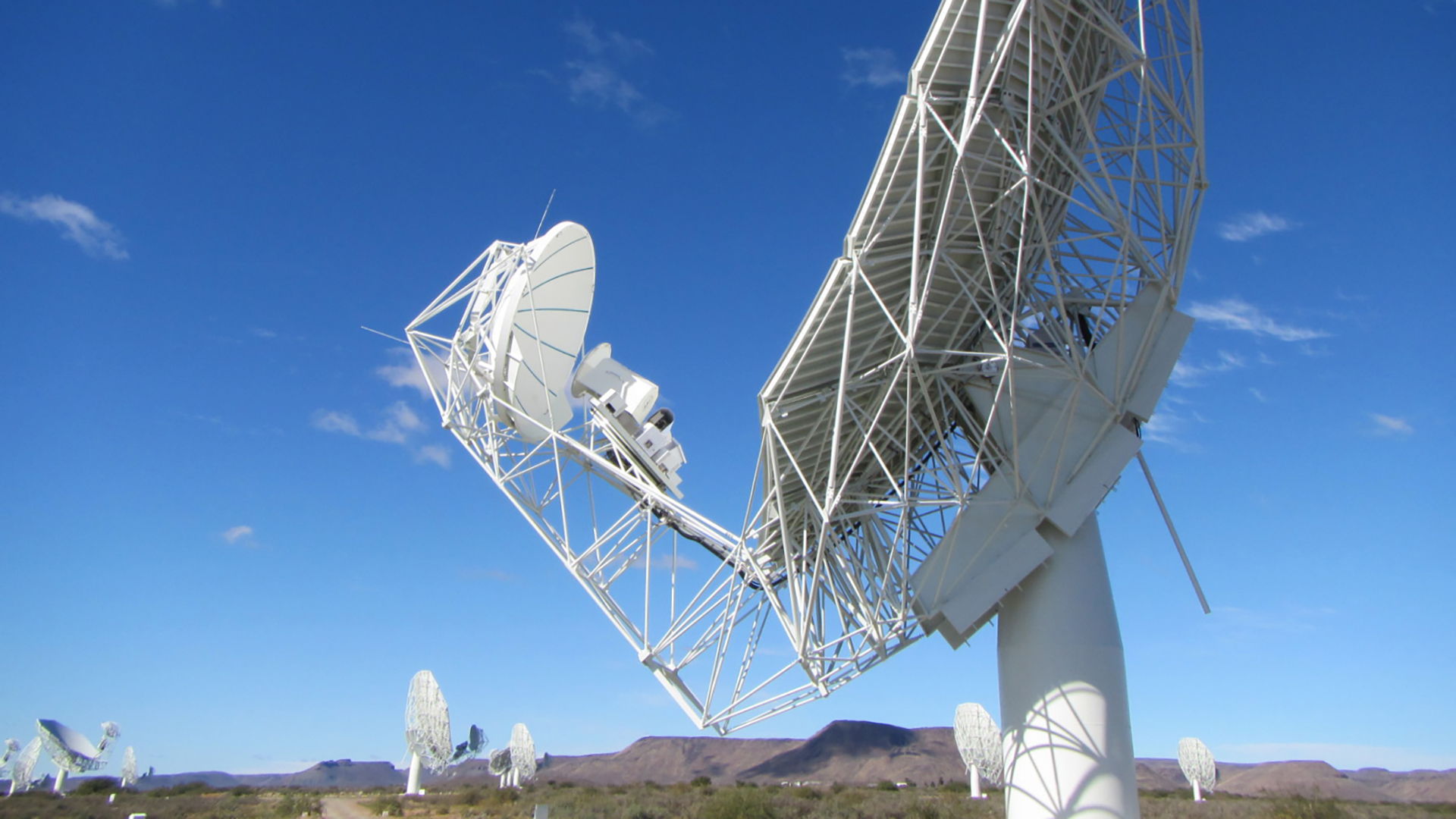
A receiver designed and built in Sweden by Chalmers University of Technology, in collaboration with Swedish industry, has been installed on one of the 64 antennas of the MeerKAT radio telescope in South Africa's Karoo desert. This marks a significant step towards the construction of the world's largest radio telescope, the Square Kilometre Array (SKA).
The receiver is a prototype intended for mass production. Its testing on MeerKAT will provide valuable data for the ongoing SKA project, an international collaboration aiming to build the most sensitive radio telescope on Earth at radio-quiet sites in Africa and Australia. The project is nearing the end of its design phase, with construction expected to begin in the early 2020s.
Chalmers' contribution to the SKA project focuses on developing advanced receiver technology. Swedish receivers will be used to measure radio waves from numerous celestial objects. Scientists anticipate achieving unprecedented sensitivity, which could allow for testing Einstein's theories to their limits and deepen understanding of the universe's history by studying distant galaxies.
"This is a proud moment for us, getting a first glimpse of what the world's largest radio telescope will be like. We are developing the world's best receiver technology and hope our contribution will enable humanity to see things we have never seen before," stated Miroslav Pantaleev, SKA project manager at Onsala Space Observatory.
The receiver's journey was preceded by intensive collaboration between researchers and engineers at Onsala Space Observatory and industrial partners. The instrument underwent rigorous environmental testing in Sweden, including vibration tests at Saab Bofors Test Centre in Karlskoga. The scientific community anticipates significant discoveries enabled by the SKA telescope, such as identifying new pulsars and studying galaxy formation in detail.