Toba eruption likely did not nearly kill human species
New research suggests the massive Toba volcanic eruption 74,000 years ago did not bring humanity close to extinction, challenging previous theories.
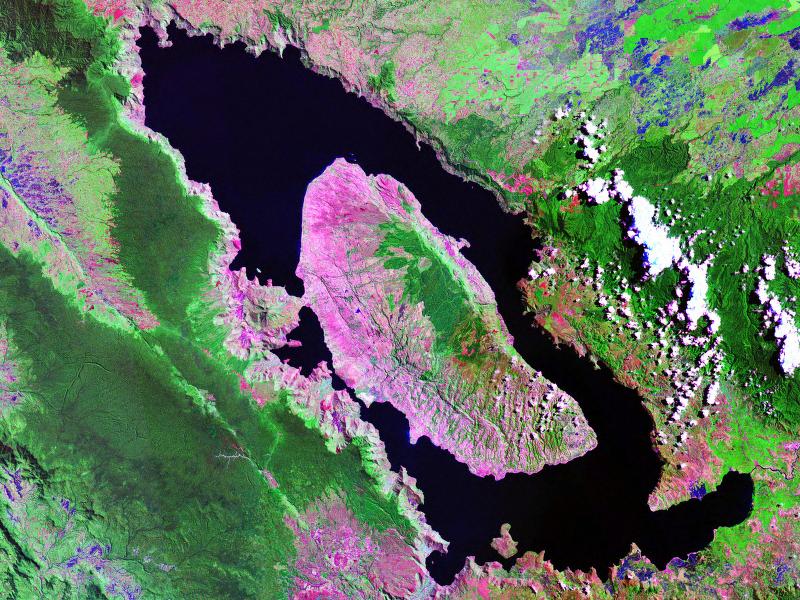
New geological research is challenging the long-held theory that the enormous Toba volcanic eruption approximately 74,000 years ago nearly wiped out the human species. The eruption, which occurred at a caldera in present-day Sumatra, released thousands of cubic kilometers of magma.
Researchers analyzed sediment cores from the bottom of a crater lake on the Kenya-Tanzania border. Their findings indicate that the global cooling caused by the Toba eruption lasted for less than two years and amounted to about half a degree Celsius. This suggests that human survival was not significantly threatened.
"People thought it might have caused massive cooling of the planet, and hence threatened the survival of our ancestors," said Jinheum Park, a geoscientist at Johannes Gutenberg University in Mainz. Park's research team found evidence in the mud that indicates the effects of the Toba eruption were more short-lived than previously believed.
Volcanic eruptions inject sulfur dioxide into the stratosphere, forming a haze of tiny droplets that reflect sunlight back into space. Larger eruptions cause more cooling. However, the study suggests that beyond a certain magnitude, larger sulfate aerosols settle more quickly, making them less effective at scattering incoming solar radiation.