Trump's White House ballroom designs draw criticism for evoking monarchies
President Donald Trump's proposed interior designs for a new White House ballroom have drawn criticism from experts. The renderings reportedly resemble European royal palaces rather than American ideals.
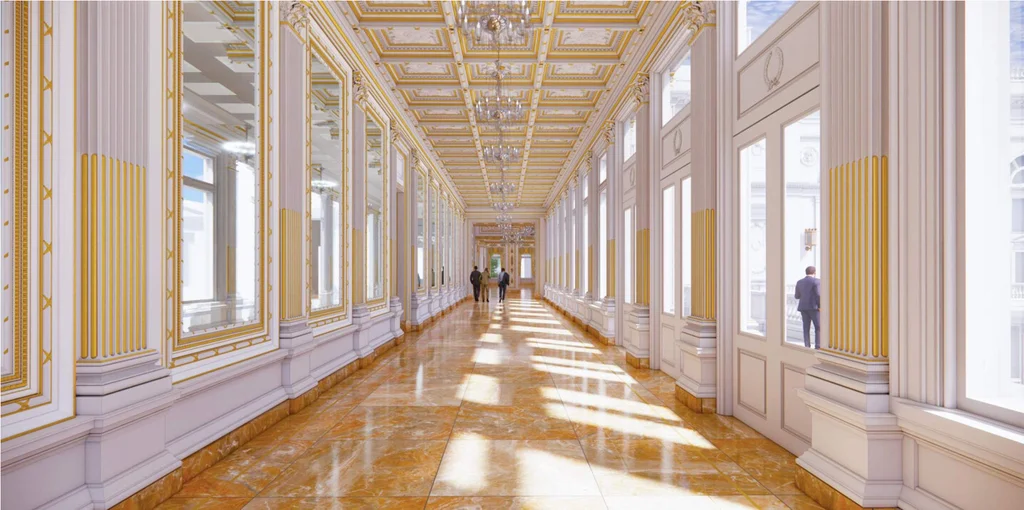
President Donald Trump's plans for a new ballroom at the White House have faced criticism from architecture and interior design professionals. Renderings shared on social media depict a space heavily inspired by European monarchies, such as France's Versailles and Moscow's Grand Kremlin Palace, rather than traditional American federal architecture.
Interior designer Annie Elliott described the renderings as a "whitewashed version of Versailles" and likened Trump's aesthetic to that of Louis XIV. Jorge Salgado, co-founder of Pelletier Salgado Architects, stated that the design borrows visual symbols of power and wealth, evoking historic monarchies over the ideals of the American republic. He characterized the style as "pastiche," or imitation.
Salgado argued that the architecture of the White House is intentionally restrained in scale and style to reflect the nation's democratic ideals, contrasting with Trump's opulent vision. The existing White House building itself represents this modesty, he noted. The proposed design, he believes, aims to project power through European palatial aesthetics.
The project has also encountered legal challenges. The National Trust for Historic Preservation sued to halt construction, arguing that only Congress can approve major changes to the White House structure. However, the U.S. Supreme Court issued a procedural ruling that allowed construction to proceed.
Initial cost estimates for the ballroom project have escalated significantly. While first projected at $200 million, the Trump administration later estimated the cost at $400 million, with current estimates reportedly reaching $600 million, partly funded by taxpayers. Interior designer Sarah Boardman considers the designs a "missed opportunity," suggesting they rely on familiar symbols of European luxury instead of exploring new American civic architectural ideas for the 21st century.