Trump's YouTube TV Channel Struggles with Low Viewership
The White House has launched "Trump TV", a 24/7 YouTube livestream, but initial viewership has been low, highlighting the challenges of establishing a direct-to-audience media platform.
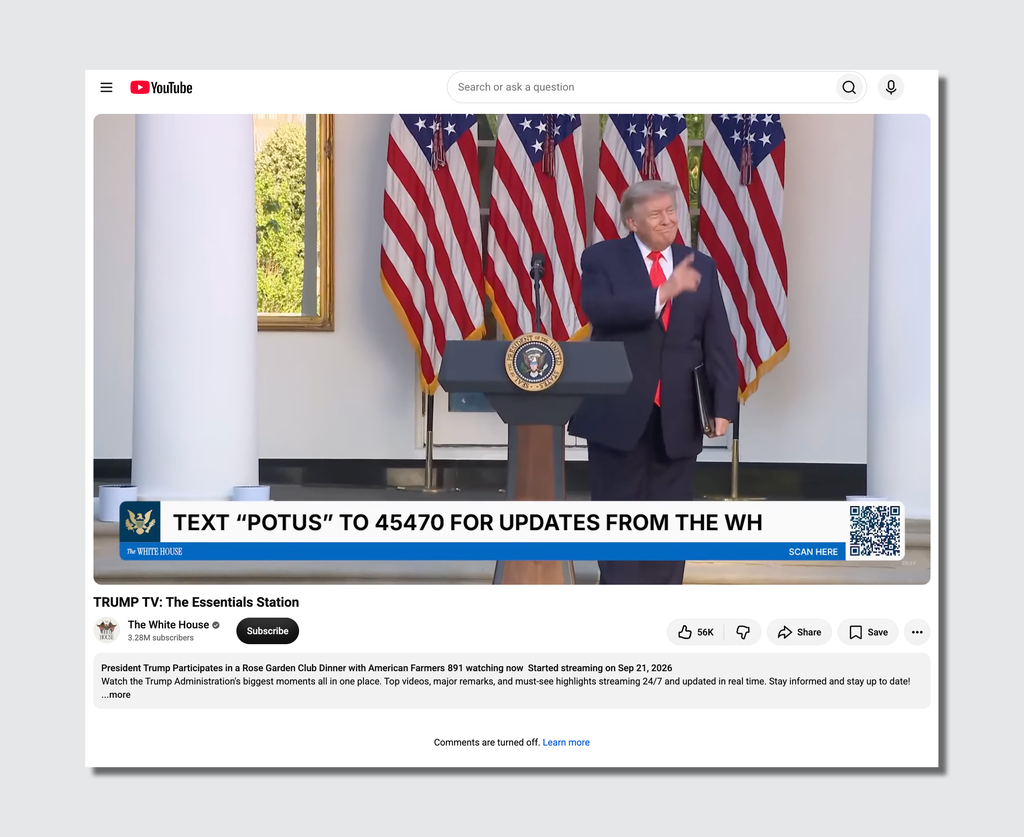
The White House launched "Trump TV" this week, a 24/7 YouTube livestream intended to showcase President Donald Trump's speeches and administration events. However, the channel has experienced low initial viewership and garnered criticism for its uncompelling content, demonstrating the difficulty of creating a state-media-like platform.
The channel debuted Monday, partly as a response to news outlets Trump had previously banned from White House briefings. Its logo resembles that of a short-lived Trump airline, and a promotional reel featured unauthorized clips from shows like "Seinfeld" and "The Simpsons" with the "TRUMPTV" logo repeated.
Despite being promoted as "the latest and greatest from the administration," the viewing experience has been described as akin to a shuffled playlist of older videos without context. The streams lack information on when or where they were filmed and do not interrupt programming for live events, instead showing archived speeches even during concurrent important meetings.
Media experts note that the U.S. does not have a state media system, and a YouTube channel is not equivalent. Developing state broadcasters requires significant investment, time, and audience-building efforts. "Trump TV" averaged over 1,000 concurrent viewers in its first 24 hours, a number that fell below 1,000 on the second day.
The concept of "Trump TV" is not new, with reports of the former president considering a media venture during his 2016 campaign. The current channel's aim appears to be advancing the administration's narrative while marginalizing independent press. Analysts suggest the platform may serve propagandistic purposes, amplified by the broader right-wing media ecosystem.