UC Berkeley Building Features External Earthquake Protection System
The UC Berkeley Grimes Engineering Center has been fitted with a new, externally visible seismic-responsive structural system. Designed by SOM, the system utilizes steel tension rods and a shape-memory alloy.
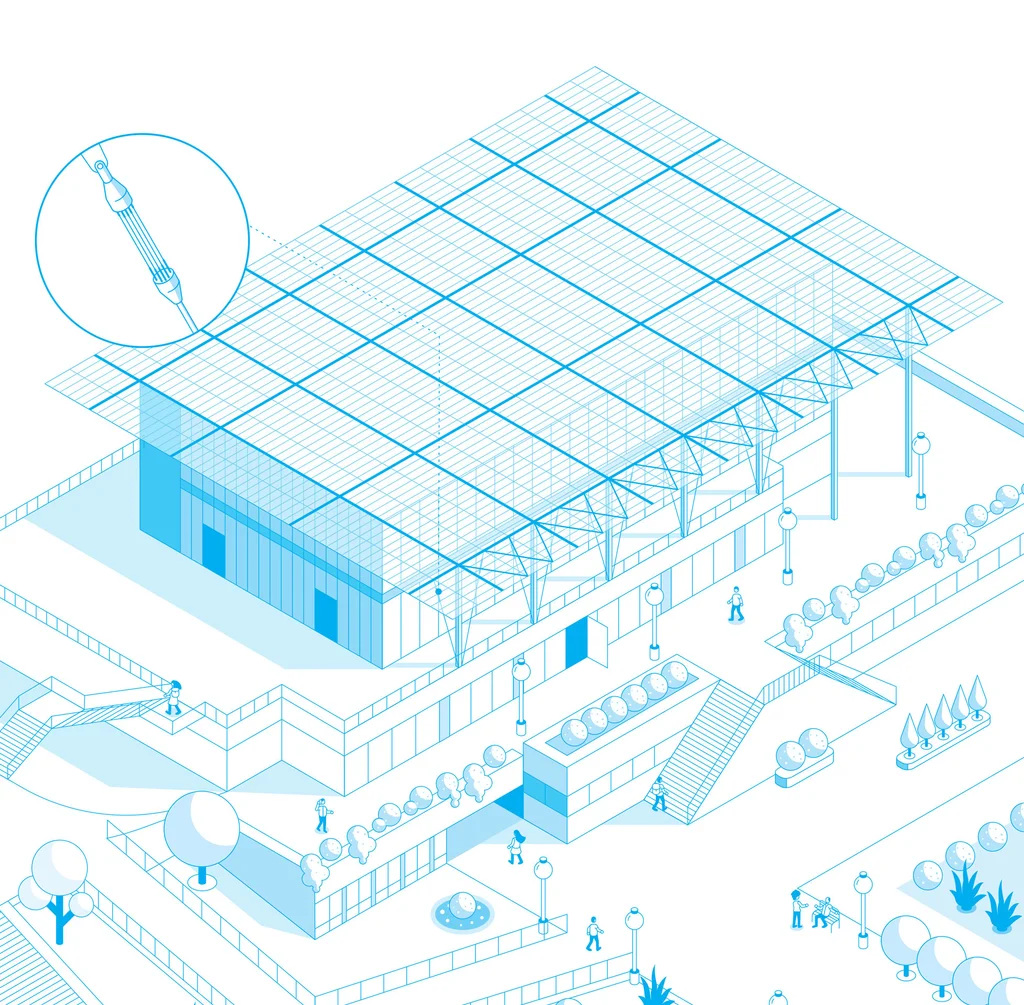
The UC Berkeley Grimes Engineering Center now features a prominent, externally visible structural system designed to withstand significant earthquakes. Skidmore, Owings & Merrill (SOM) Architects designed the building with steel tension rods strategically placed around its perimeter, intended to reinforce it against seismic activity in the Bay Area.
The system consists of steel tension rods with a unique splice near the top of each rod. This splice contains cables made from a shape-memory alloy, a material also used in spacecraft that can deform under stress and return to its original shape. The building, completed in April 2025 at a cost of $110 million, showcases this technology on its exterior.
SOM developed the system in collaboration with researchers from UC Berkeley's engineering school, a recognized center for seismic studies. The decision to leave the tension rods exposed serves as both an architectural statement and an educational tool, illustrating the application of new seismic technologies. The building's design was recognized with the 2026 Innovation by Design Award.
According to SOM, the system functions similarly to a rubber band, stretching and reforming to allow the building to return to plumb after seismic events. Further development and testing of this technology are planned in partnership with the university.