Underwater Data Centers and Wind-Powered AI Infrastructure Gain Traction
China's Lin-gang underwater data center achieves up to 22.8% cooling energy savings, signaling a global shift in the data center industry driven by AI demand.
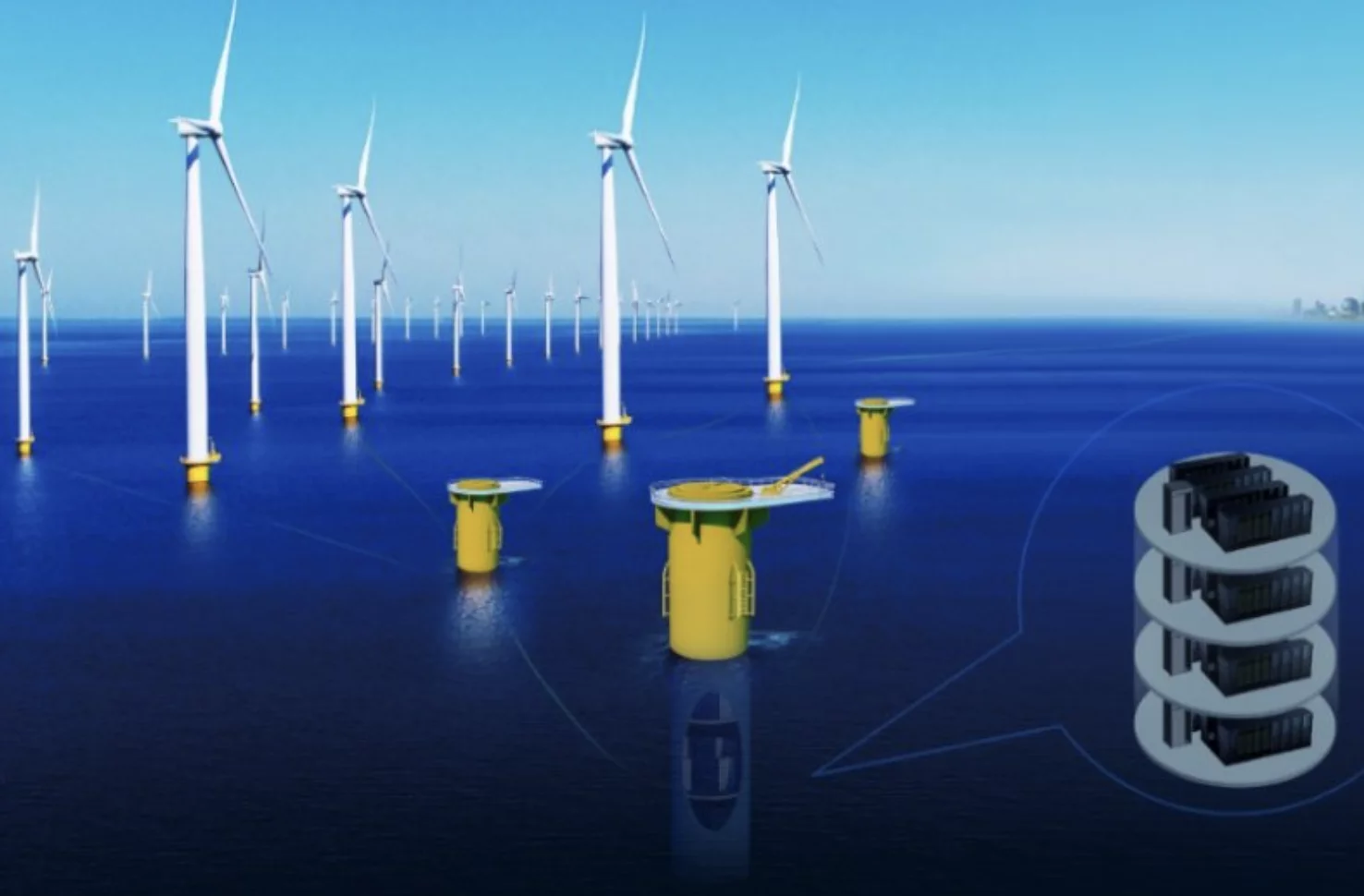
An underwater data center in Lin-gang, China, has achieved up to 22.8% in cooling energy savings, signaling a potential global shift in the data center industry. According to the International Energy Agency (IEA), data center electricity consumption is forecast to increase to approximately 945 TWh by 2030, largely driven by the surge in AI and cloud computing.
The underwater configuration can save over 90% of physical land usage compared to terrestrial facilities, offering a solution for land-constrained regions and high real estate costs. Cooling systems can account for 30% to 40% of a data center's total energy consumption, making efficient thermal management crucial for both operational costs and carbon footprint.
AI servers are expected to require 5 to 10 times more power density per rack than traditional enterprise IT racks. This is driving demand for next-generation cooling technologies, including liquid cooling and underwater deployments. As cumulative offshore wind capacity exceeded 1 terawatt (TW) globally in 2024, future data centers may be directly powered by large-scale renewable electricity generation.
Microsoft's Project Natick found underwater servers to be eight times more reliable than land-based counterparts, attributed to their controlled environment and fewer human interactions. The significant investments in AI and data center infrastructure announced by hyperscalers like Microsoft, Google, and Amazon underscore the growing need for energy-efficient and sustainable computing architectures.