Unexpected discovery on Saturn's moon challenges view on pre-life chemistry
Scientists at Chalmers University of Technology and NASA have discovered that substances previously thought to remain separate can combine under the extreme conditions on Saturn's moon Titan.
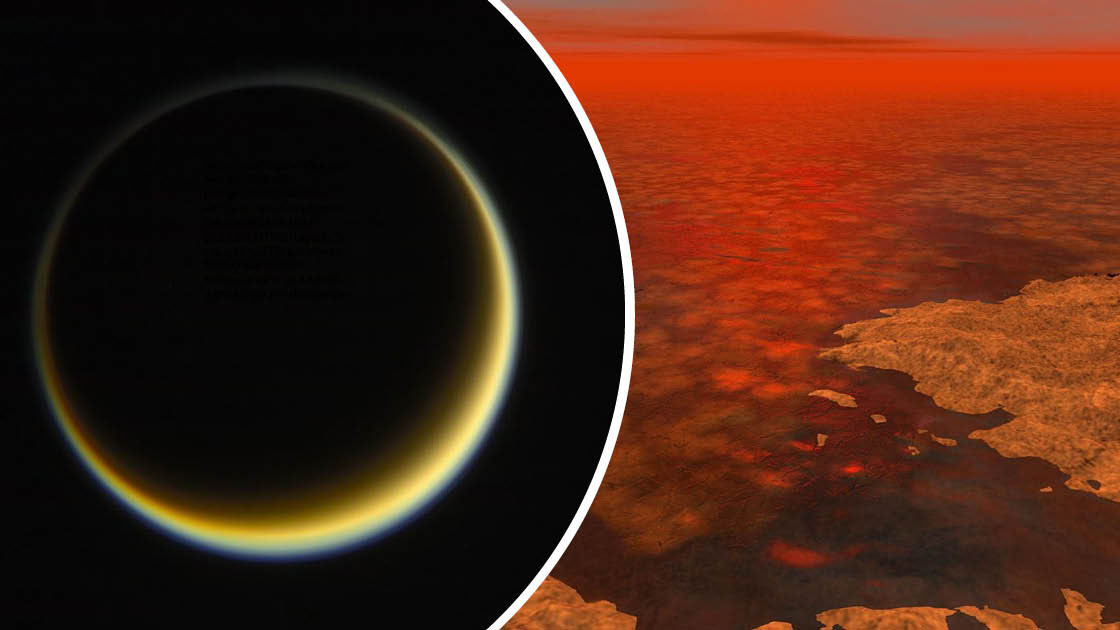
Researchers at Chalmers University of Technology, in collaboration with NASA, have made a surprising discovery on Saturn's largest moon, Titan. Their study, published in the journal PNAS, shows that substances previously considered separate can combine under Titan's frigid conditions, challenging established chemical principles.
Titan's cold environment and thick atmosphere are considered analogous to conditions on the early Earth, making it a key location for studying the origins of life. The research revealed that methane, ethane, and hydrogen cyanide—substances abundant on Titan—can form co-crystals. This contradicts the fundamental chemical rule 'like dissolves like,' which typically prevents polar and nonpolar substances from mixing, akin to oil and water.
The discovery challenges our understanding of pre-biotic chemistry and how life's building blocks might form in inhospitable environments. Hydrogen cyanide is crucial for the abiotic formation of amino acids and nucleobases, which are essential for life. These findings offer new perspectives on chemical processes in extreme cold and potentially how Titan's unique geological features, like lakes and dunes, were formed.
The study originated from a question posed by NASA's Jet Propulsion Laboratory (JPL) regarding the fate of hydrogen cyanide on Titan. In collaboration with Chalmers' research group, led by Professor Martin Rahm, large-scale computer simulations were employed. These simulations demonstrated that hydrocarbons can infiltrate hydrogen cyanide crystals and form stable co-crystal structures at the extremely low temperatures found on Titan. The results align well with NASA's experimental measurements.
Chalmers and NASA plan to continue their collaborative research into hydrogen cyanide chemistry. The findings could be significant for understanding chemical processes in other cold cosmic environments. NASA's Dragonfly mission, scheduled to arrive at Titan in 2034, will benefit from these new insights as it investigates the moon's surface and its potential for life.