US Army seeks hybrid trucks to power laser weapons
The U.S. Army is focusing its ground-based laser weapon efforts on light tactical vehicles, but these platforms face significant power generation challenges.
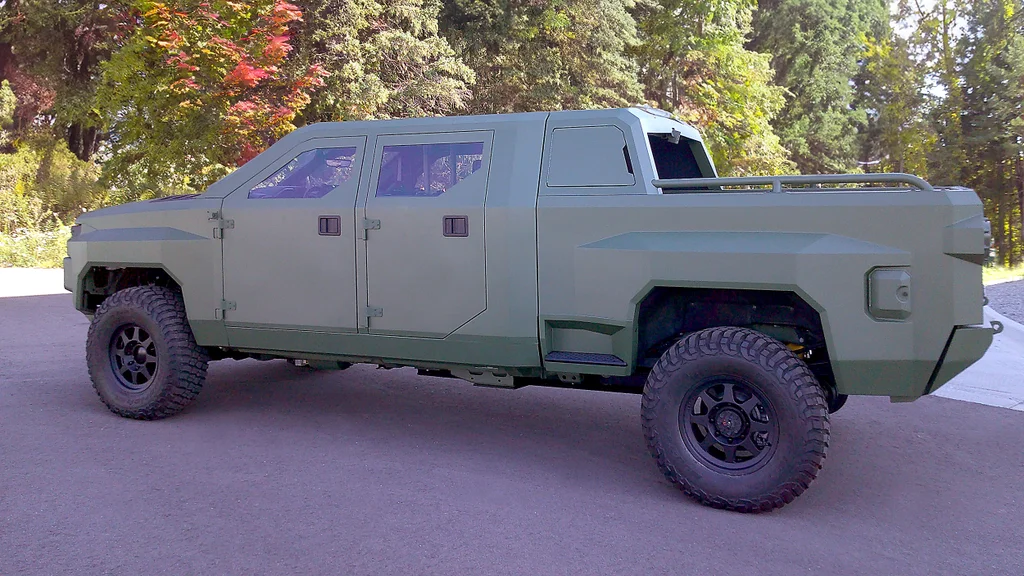
The U.S. Army is moving towards selecting a high-energy laser weapon for counter-drone missions, with a focus on integrating these systems onto light tactical vehicles like the Joint Light Tactical Vehicle (JLTV) and Infantry Squad Vehicle (ISV).
Following the cancellation of its Stryker-based Directed Energy-Maneuver Short-Range Air Defense program, the Army has redirected its efforts toward lighter platforms. AV's 20-kilowatt LOCUST Laser Weapon System has undergone operational testing on both the ISV and JLTV, demonstrating their capability to carry and deploy directed energy weapons.
The ISV and JLTV are central to the military's emerging approach to distributed operations. The ISV is valued for its maneuverability in countering low-cost drones, while the JLTV serves as a backbone for the Marine Corps' air defense systems.
However, a significant hurdle is the power output of these vehicles. The JLTV can export only up to 15 kilowatts, and the ISV's additional power capacity is limited. Directed energy weapons require significant, sustained power spikes for engagement, a demand not efficiently met by conventional generators. The Army is exploring hybrid architectures, combining generators for average loads with high-voltage batteries for peak power delivery.