Volkswagen Group and unions disagree on automaker streamlining plan
Volkswagen Group's plan to streamline its operations and reduce costs has been rejected by employee representatives on the company's supervisory board.
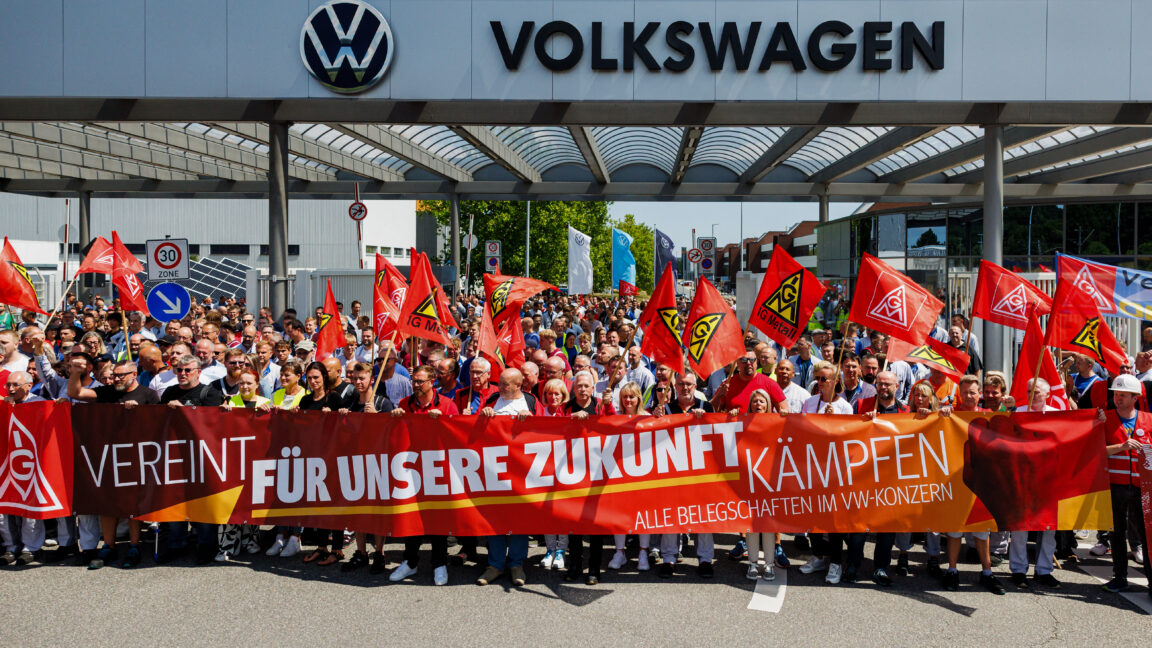
Volkswagen Group's proposed plan to enhance efficiency and cut costs has encountered opposition from labor unions. According to Reuters, a proposal expected to include factory closures and redundancies failed to gain sufficient support in a 12-7 vote by the company's supervisory board.
Despite strong electric vehicle sales in its home region, Europe's largest automaker, which also owns brands like Audi, Porsche, and Skoda, has seen its profit margins shrink. Costly tariffs and eroding market share in China and North America have significantly impacted financial performance.
Unlike many automotive manufacturers, labor unions hold substantial power within the Volkswagen Group. Employee representatives occupy half of the seats on the supervisory board. Additionally, seats are held by representatives from the German state of Lower Saxony, a part-owner of the company. This structure ensures that business objectives must be balanced with the interests of the workforce.
Historically, suggestions of redundancies have led to lengthy disputes. Most recently, in 2024, Volkswagen Group and its unions reached an agreement to reduce the workforce by 35,000 employees by 2030, highlighting ongoing pressure for cost management.
The supervisory board's vote underscores the ongoing tension between the imperative for cost savings and the influential role of labor unions in shaping employment conditions and job security within the conglomerate.