World's Largest Solar Telescope Captures Vortices on Sun's Surface
The Daniel K. Inouye Solar Telescope has successfully observed Kelvin-Helmholtz instabilities on the Sun's surface. This discovery may reshape the understanding of energy transfer within the Sun's atmosphere.
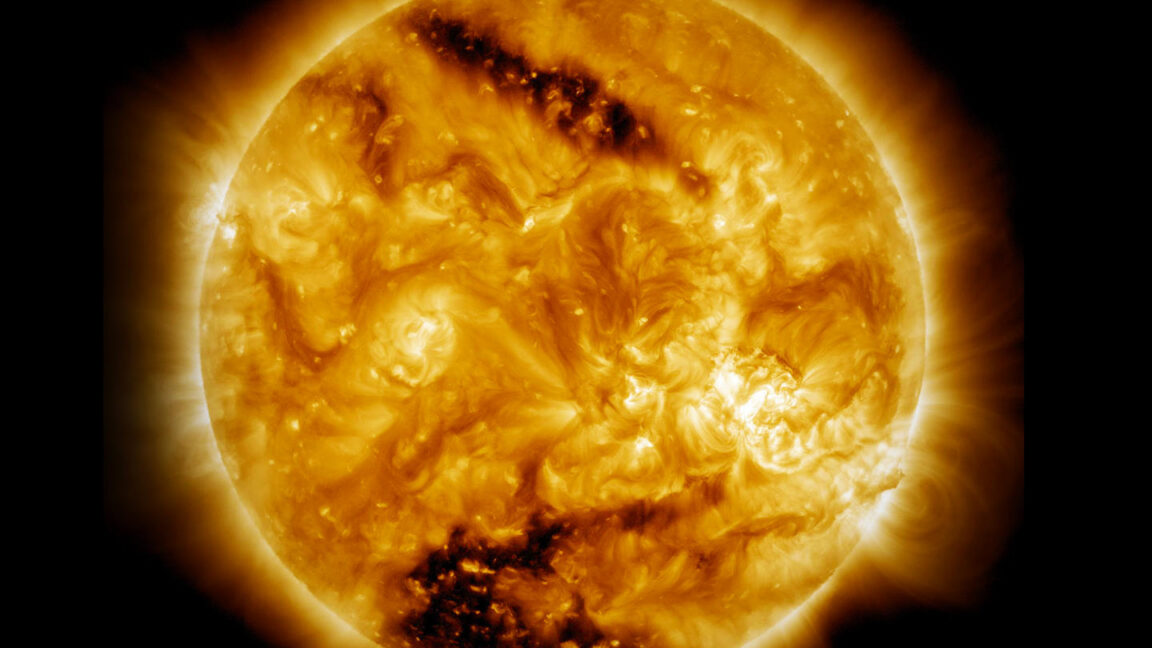
The Daniel K. Inouye Solar Telescope, the world's largest solar observatory located in Hawaii, has for the first time definitively observed Kelvin-Helmholtz instabilities on the Sun's surface. This phenomenon, where boundary layers between fluids moving at different speeds curl into vortices, has been understood in physics since the 1860s.
Scientists have long suspected that similar processes occur in the Sun's plasma, but their small scale has made them difficult to detect. Previous telescopes with mirrors smaller than two meters were unable to resolve these structures. The Inouye telescope's four-meter mirror has now enabled detailed observation.
A research team, led by David Kuridze and Friedrich Wöger of the National Solar Observatory, reports that these plasma vortices are ubiquitous on the Sun's surface. Their findings suggest this could alter current models of how heat, mass, and magnetic energy are transported through the Sun's atmosphere.
This observation opens new avenues for studying solar dynamics and the complex atmospheric processes, potentially impacting the prediction of space weather and solar activity.