xFusion presents AI data center cooling and power solutions at OCP 2026
xFusion showcased new IT infrastructure at OCP 2026 designed to address the increasing power demands and cooling challenges of the AI era.
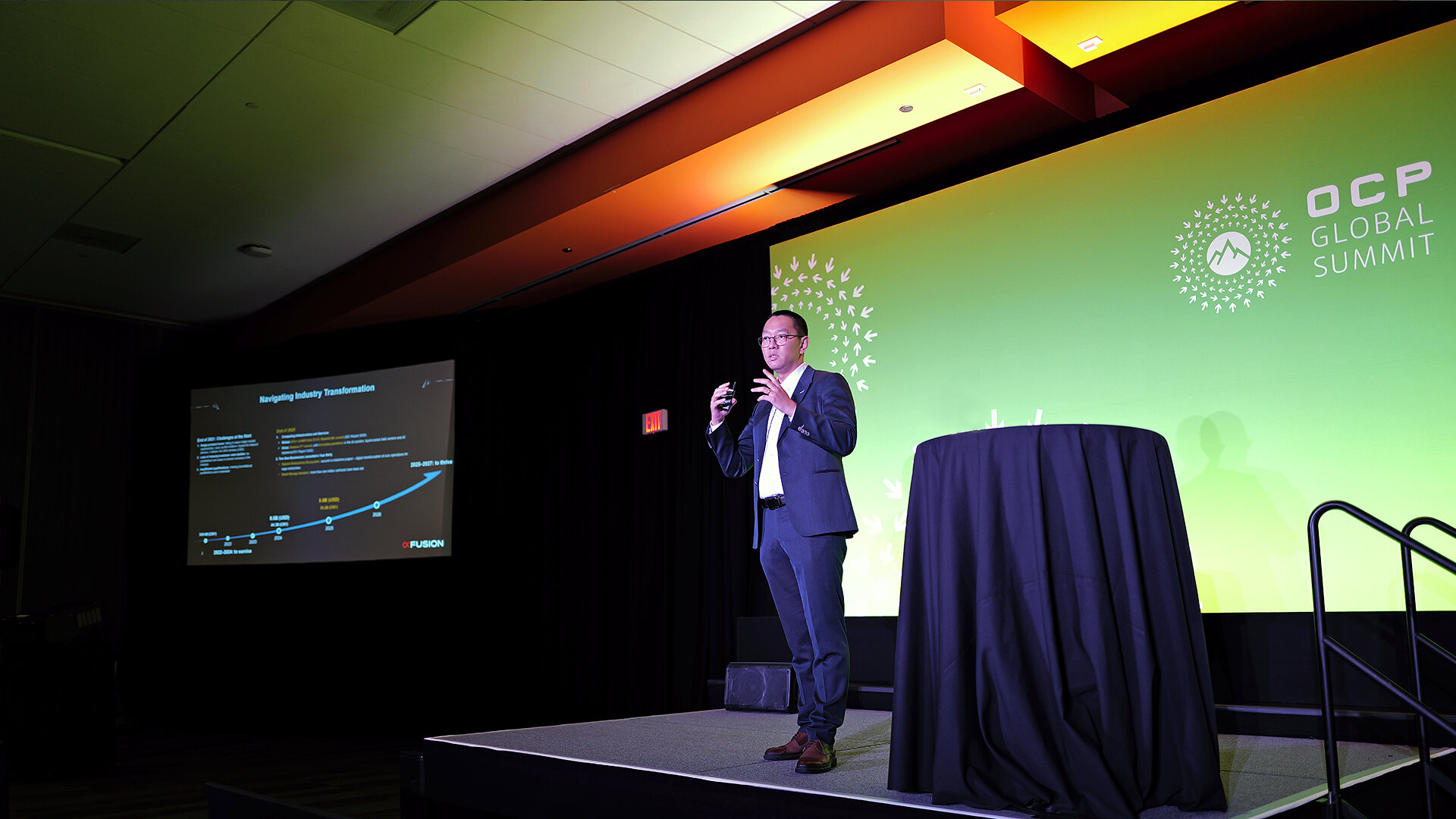
xFusion, a provider of IT infrastructure solutions, participated in the Open Compute Project (OCP) 2026 summit in San Jose, California. The company presented its latest IT infrastructure designed for AI, focusing on rack-scale liquid-cooled systems, super-node architectures, and next-generation high-voltage DC power solutions.
The escalating demands of AI workloads are pushing data center energy consumption and heat generation to unprecedented levels. With single chip power approaching 3,000 watts and rack power densities reaching megawatt class, power delivery and cooling have become critical constraints for AI infrastructure scalability. Traditional administrative functions are now central to datacenter operations.
At the event, Arthur Wang, Director of Product Management at xFusion, delivered a keynote address introducing a new framework for measuring data center value: "WATT → FLOPS → TOKEN → AGENT → VALUE." This metric evaluates how effectively electrical watts are converted into tangible business outcomes, from computational power to AI agents delivering measurable value.
xFusion detailed its approach to three key infrastructure challenges: cooling, power, and interconnection. For cooling, the company highlighted 100% direct liquid cooling (DLC) solutions capable of dissipating over 4,000 watts per chip, addressing the limitations of air cooling. In power delivery, xFusion is developing 800V high-voltage DC architectures to significantly reduce energy losses in megawatt-scale deployments. The company also presented its DaYu 2.0 supernode, designed for high-bandwidth interconnectivity using optical solutions to meet the demands of large-scale AI clusters.