Young Voters Critical of Healthcare System's Shortcomings for Women
A new national survey reveals a significant generational gap, with young voters, particularly Gen Z and Millennials, being most critical of the U.S. healthcare system's handling of women's reproductive health.
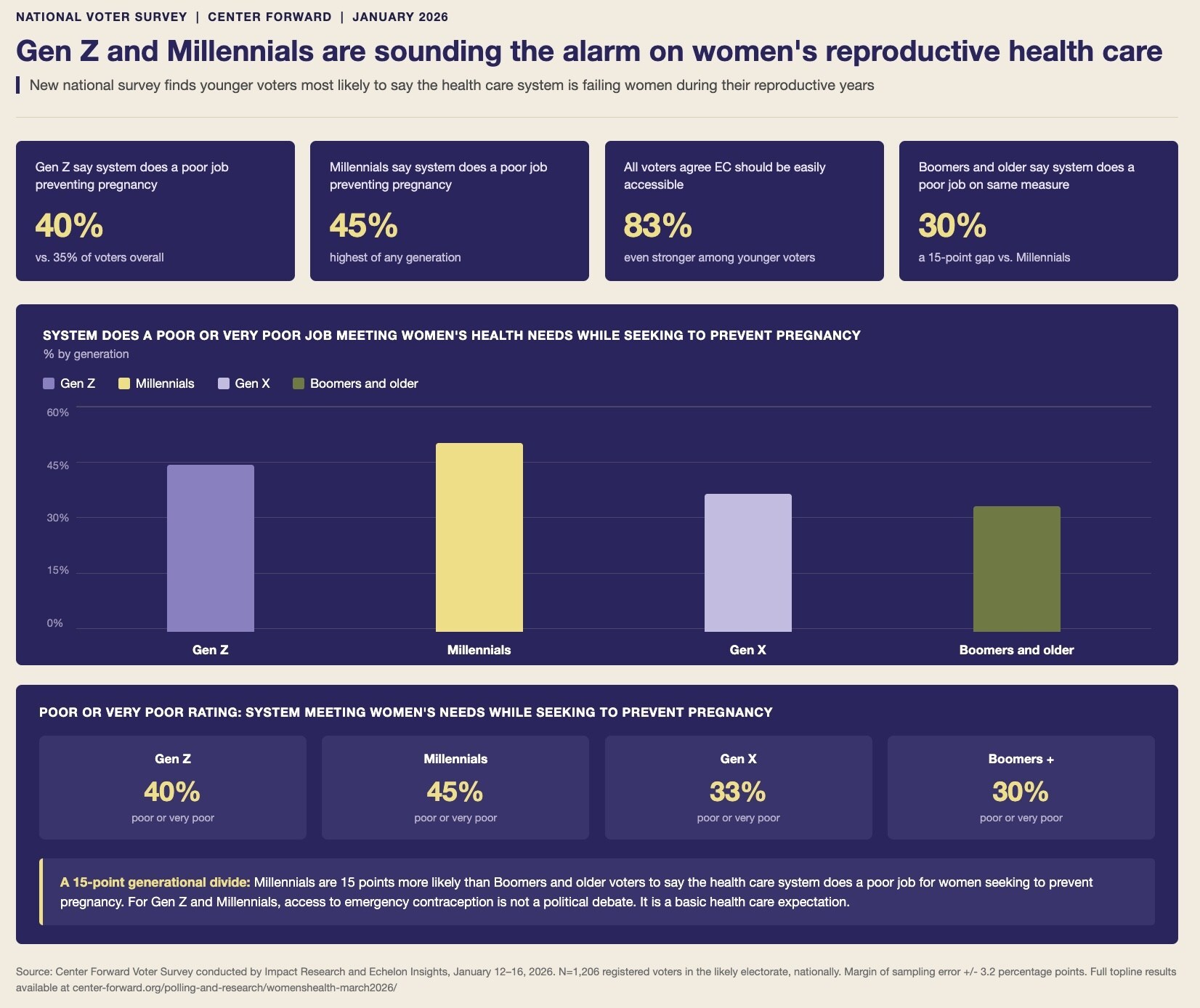
A nationwide survey indicates a substantial generational divide regarding the perceived adequacy of healthcare for women's reproductive needs. Conducted by Impact Research and Echelon Insights for Center Forward, the study found that Gen Z and Millennial voters are considerably more likely than older generations to express dissatisfaction with the healthcare system's performance in providing care for women seeking contraception.
Among surveyed Millennials, 45% stated that the U.S. healthcare system does a poor or very poor job addressing women's health needs related to pregnancy prevention. For Gen Z voters, this figure was 40%. In contrast, only 30% of Baby Boomer and older voters rated the system poorly on this measure, marking a 15-percentage point difference compared to Millennials.
The research also highlighted that 83% of all respondents believe it is important for women to have quick and easy access to over-the-counter emergency contraception when needed. This sentiment was even stronger among younger voters. Furthermore, 76% of respondents felt that emergency contraception should remain accessible over-the-counter, similar to other non-prescription medications.
Tara Evans, Marketing Director for Plan B, emphasized the impact of education, noting that when voters understand what Plan B is and how it functions, support increases across various demographics. Evans stated it is crucial for accurate information to reach all generations and for the access that younger women rely on to be preserved.
The survey included 1,206 likely voters nationwide. The generational disparity reflects a broader shift in younger Americans' perspectives on reproductive healthcare, viewing access to emergency contraception as a fundamental health expectation rather than a political issue.